All designs
Container Farm
Fresh greens where the climate or the soil says no.
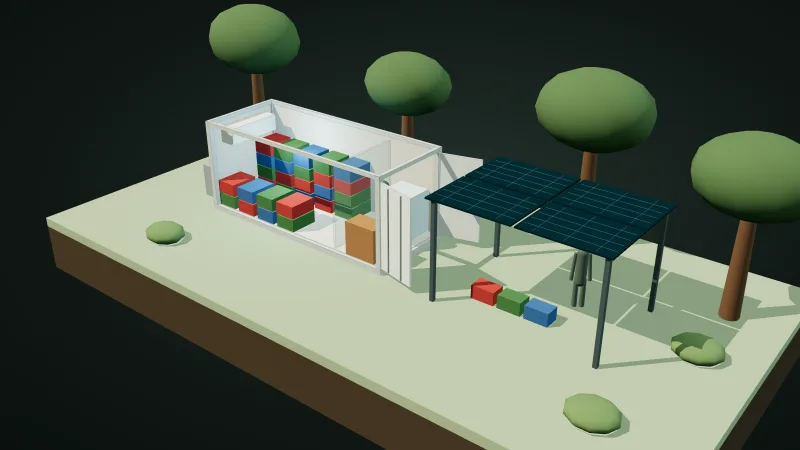
A sealed, insulated container with stacked growing trays, LED light, recirculating water and a small gantry robot that moves trays between seeding, growing and harvest.
- Built into
- One 40 ft high-cube container
- Crops
- Leafy greens, herbs
- Electricity
- 100–250 kWh a day
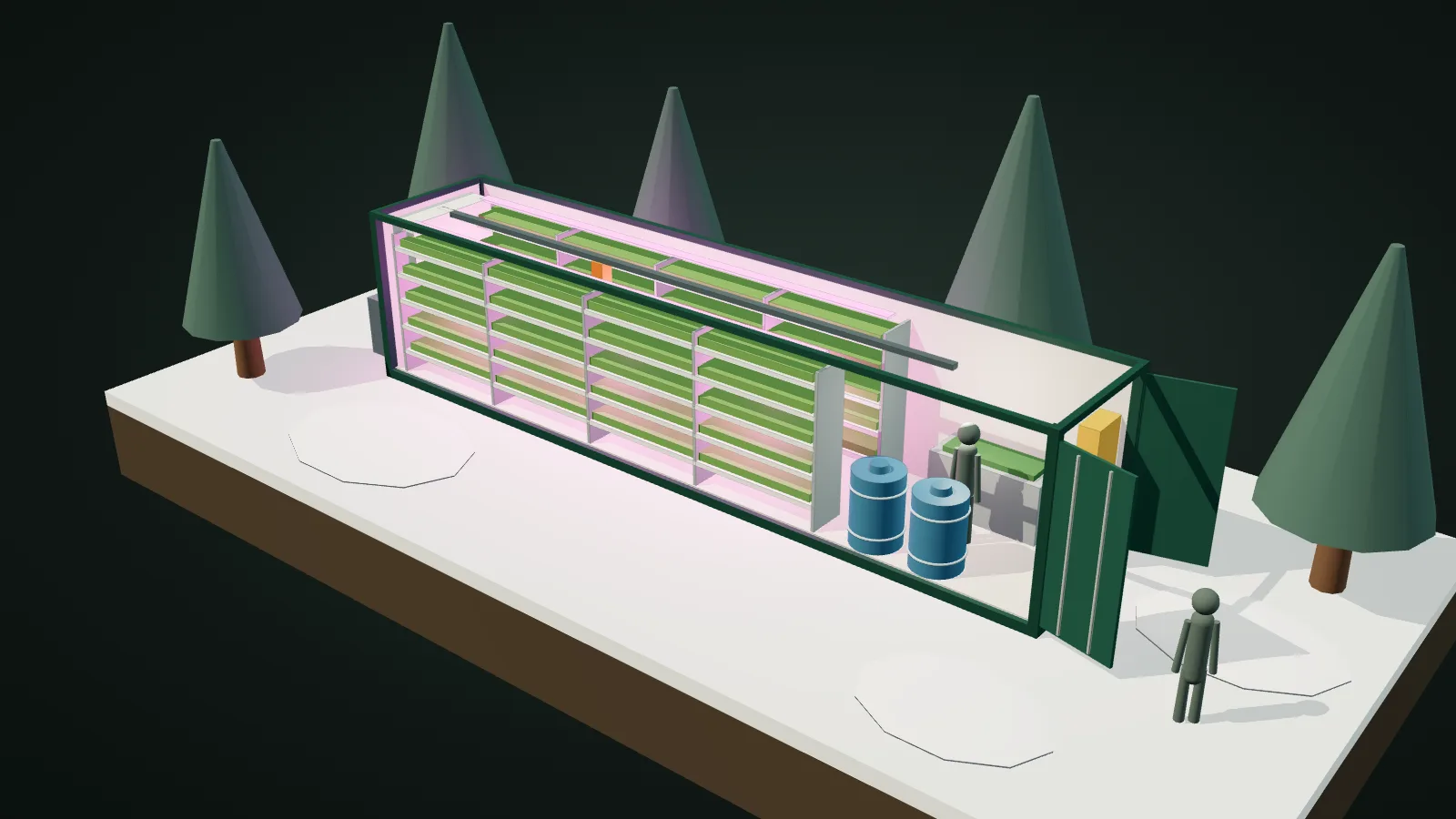
Drag to turn it around. Click any part to see what it is.
The problem
Leafy vegetables spoil quickly and travel badly. Remote towns, cold regions, islands and dense city blocks often pay a lot for greens that arrive tired, or go without.
How it works
- Seedlings start at a bench near the door, then move onto five tiers of shallow trays along both walls.
- Water and nutrients circulate from two tanks, through the trays and back. Very little is lost, so daily water use is small.
- A rail-mounted carriage runs down the aisle to lift trays in and out. It saves labour and keeps people out of the humid growing zone, but every task can still be done by hand.
- A heat pump and dehumidifier hold temperature and humidity. Most of the electricity goes to lights and to removing the heat those lights make.
Who it suits
Schools, clinics, grocers and cooperatives with reliable electricity and a steady local buyer for salad crops and herbs.
Rough numbers
- Footprint
- 30 m²One 40 ft high-cube container plus door clearance.
- Crops
- Leafy greens, herbsNot grains, roots or anything that supplies staple calories.
- Electricity
- 100–250 kWh a dayTypical of vendor-published figures. Depends heavily on outside temperature and light hours.
- Water
- Tens of litres a dayRecirculating system. Source water still needs testing.
What it will not do
- It is an electricity-hungry way to grow food. On solar alone it needs tens of kilowatts of panels and storage, far more than fits on its own roof.
- It grows salad, not dinner. It improves diet quality and can earn income; it does not feed a community.
- Seeds, nutrients, growing media, filters and spare parts are a supply chain someone has to own.
- A trained operator has to be there most days. The robot reduces lifting, not responsibility.
Goes well with
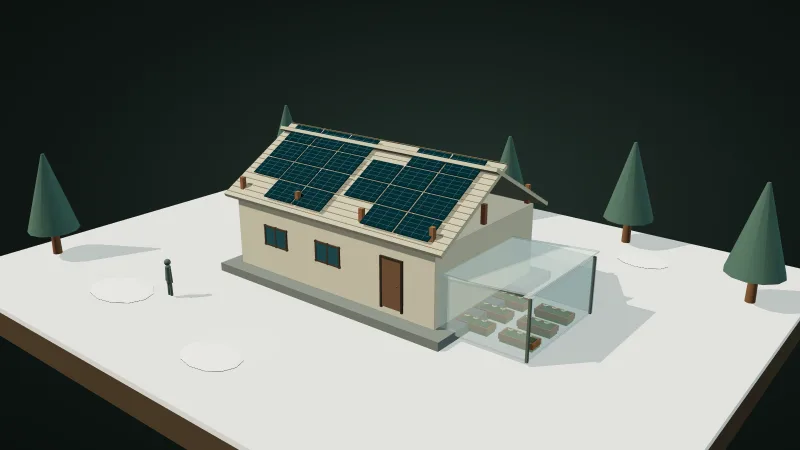 Alpine HearthKeep one small core warm, dry and serviceable.
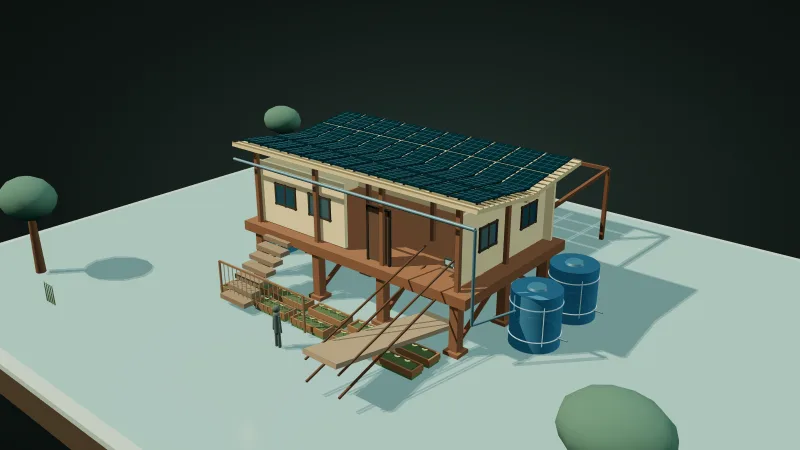 Resilience HubUseful every day. Ready on the worst day.
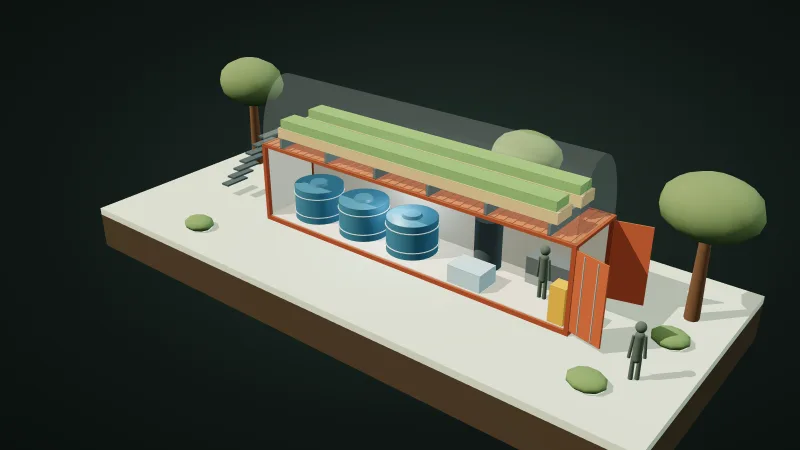 Greenhouse on a BoxUse the sun for light. Use the box for everything else.
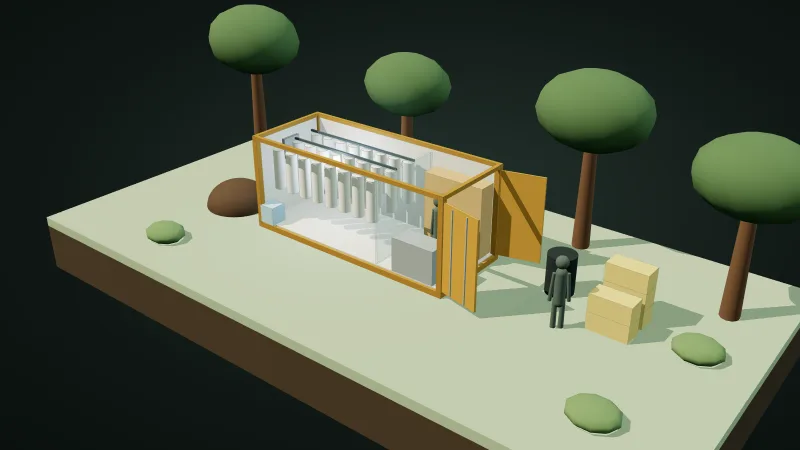 Mushroom BoxTurn straw and sawdust into food, in the dark.
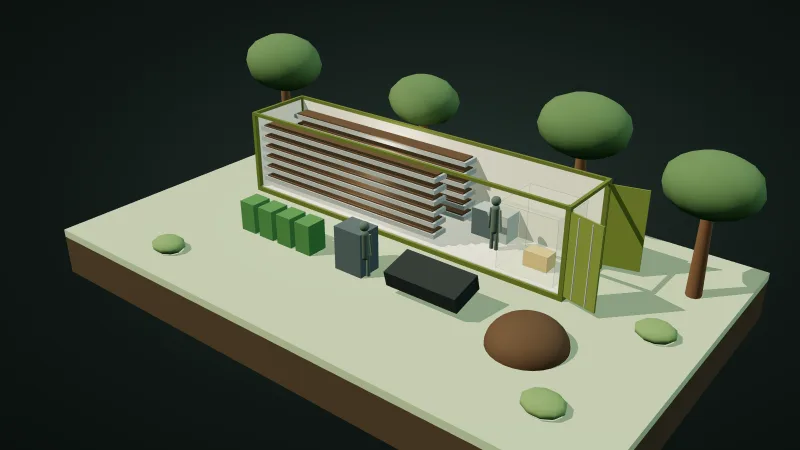 Feed BoxLet insects turn market waste into animal feed.
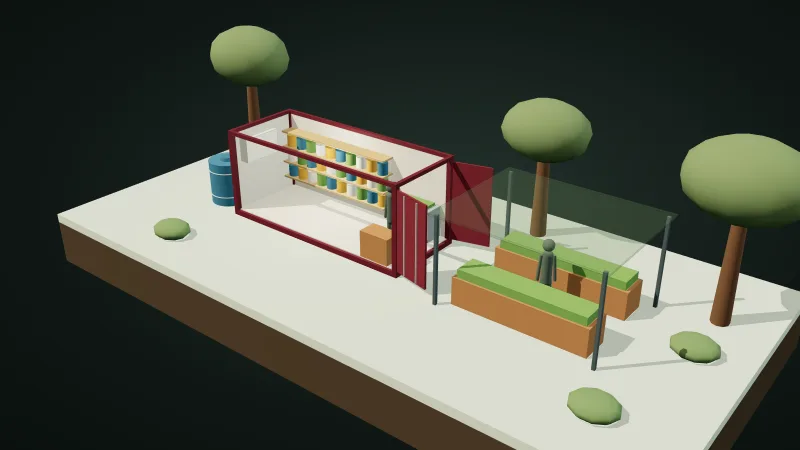 Seed BoxKeep next season's seed cool, dry and close to home.
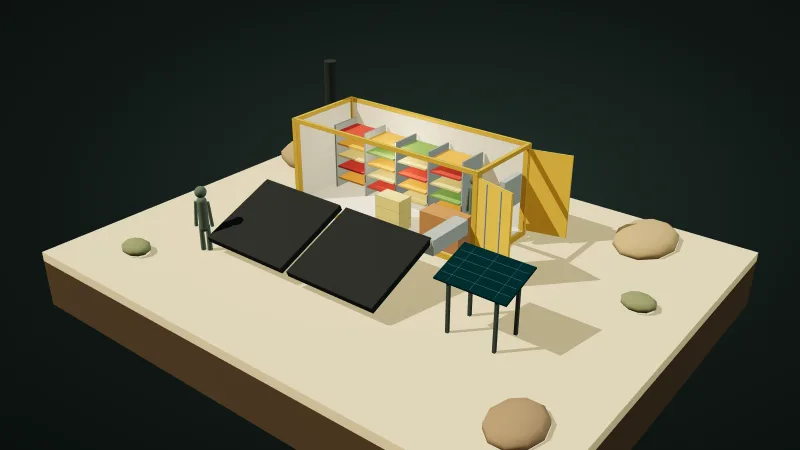 Dryer BoxDry the harvest before the mould gets to it.
 Cold RoomGive farmers a few more days to sell.