All designs
Feed Box
Let insects turn market waste into animal feed.
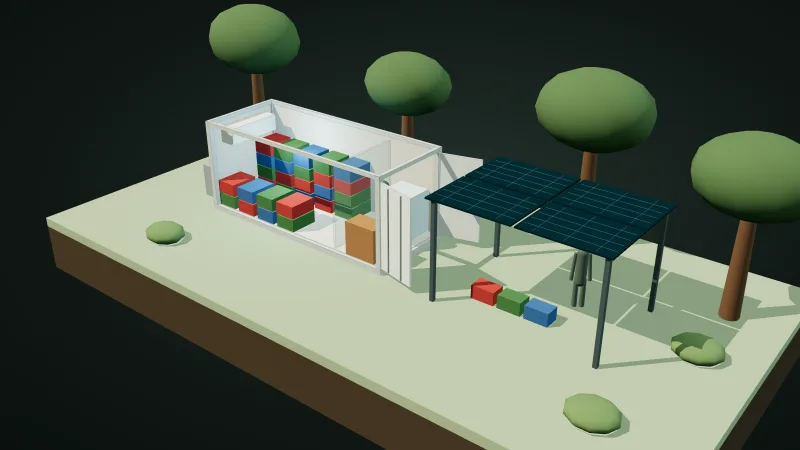
Black soldier fly larvae eat food waste in stacked trays and grow into a protein-rich feed for poultry and fish. What they leave behind is compost.
- Built into
- One 40 ft high-cube container
- Takes in
- Hundreds of kg a week
- Gives back
- 10–20% as larvae
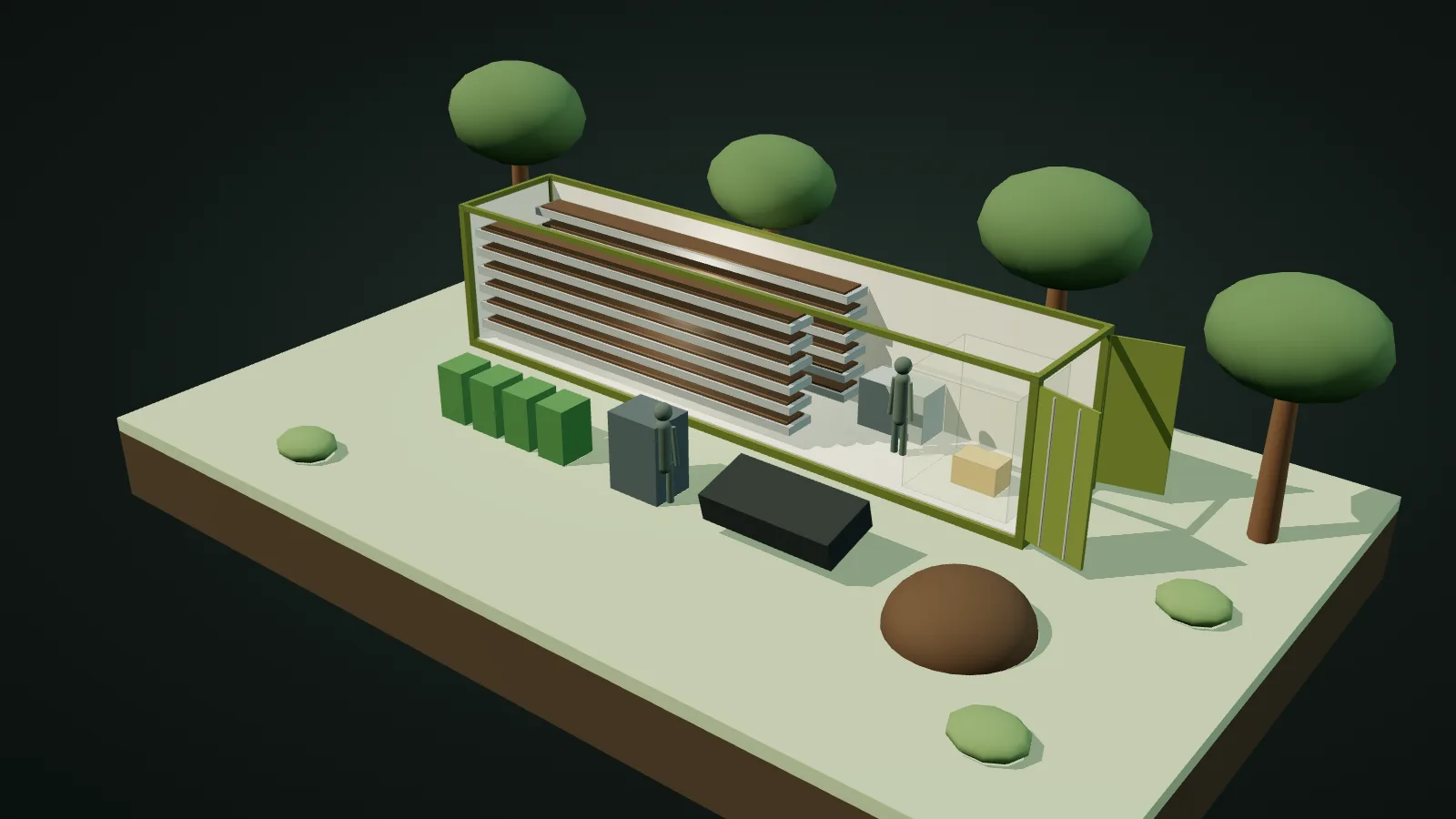
Drag to turn it around. Click any part to see what it is.
The problem
Feed is the largest cost for most small poultry and fish farmers, while markets and kitchens pay to dump wet waste that then rots.
How it works
- Sorted food waste is shredded and spread in shallow trays.
- Young larvae are added and eat for about two weeks, growing fast.
- Larvae are sieved out and fed live or dried. The crumbly residue is sold as compost.
- A netted cage keeps a small colony of adult flies that lay the next generation of eggs.
Who it suits
Poultry and fish cooperatives next to a market, canteen or food processor that can supply clean waste every day.
Rough numbers
- Footprint
- 30 m² + yardOne 40 ft high-cube container.
- Takes in
- Hundreds of kg a weekFruit, vegetable and kitchen waste, sorted to remove plastic.
- Gives back
- 10–20% as larvaeBy weight of the waste. Depends heavily on what the waste is.
- Cycle
- About two weeksFrom young larvae to harvest in warm conditions.
What it will not do
- It needs a steady stream of clean, sorted waste. Rules on feeding meat or manure to insects vary by country.
- Larvae grow well only when it is warm, roughly 25–30 °C. Cold places need heating.
- Keeping the breeding flies healthy is the hard part, and where most small projects fail.
- Run badly, it smells and attracts pests. It needs a trained operator every day.
Goes well with
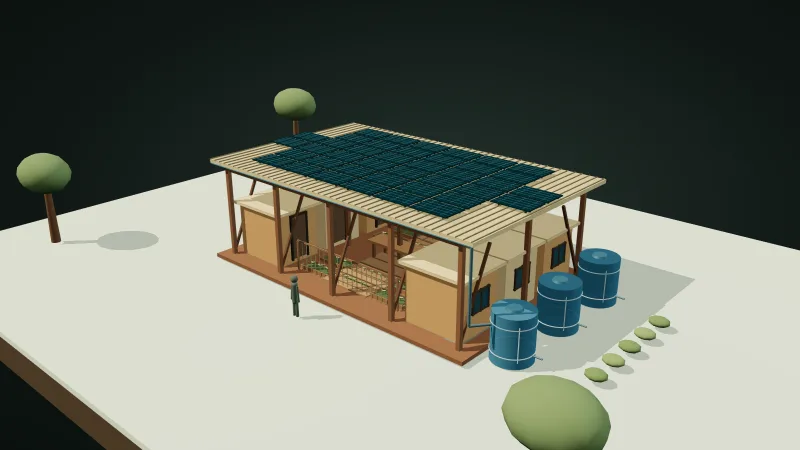 Canopy CommonsShare expensive systems. Keep private life private.
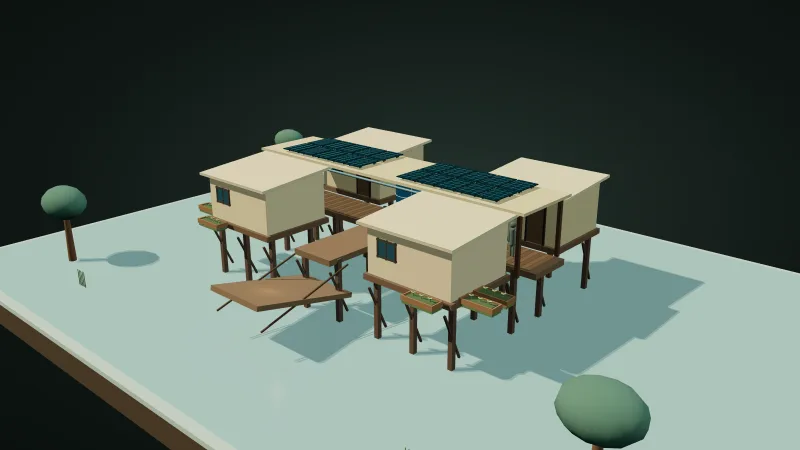 Delta WalkwayKeep daily life above water without blocking the water.
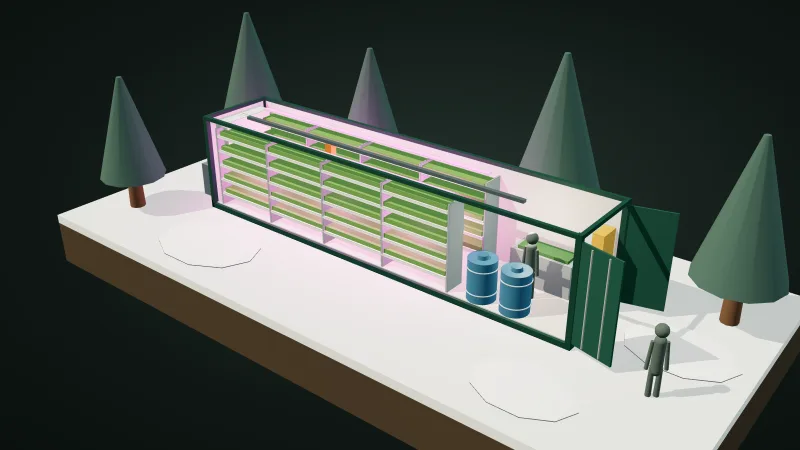 Container FarmFresh greens where the climate or the soil says no.
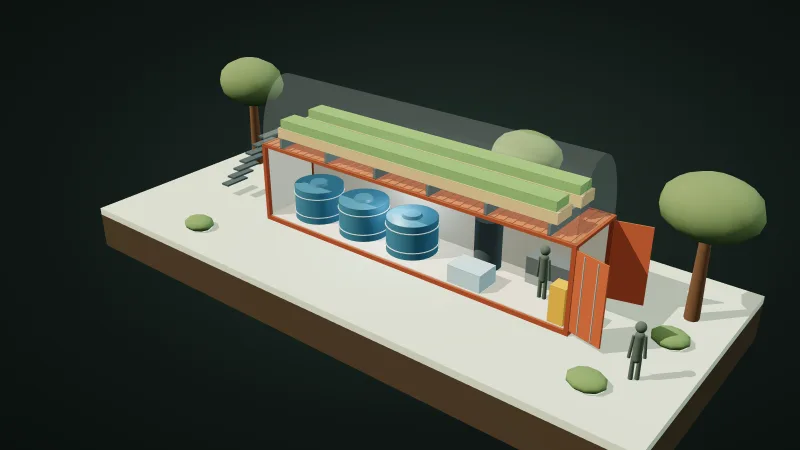 Greenhouse on a BoxUse the sun for light. Use the box for everything else.
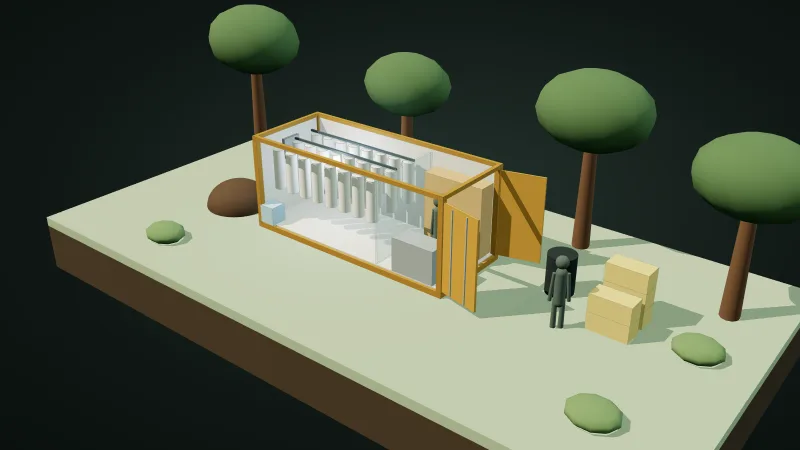 Mushroom BoxTurn straw and sawdust into food, in the dark.
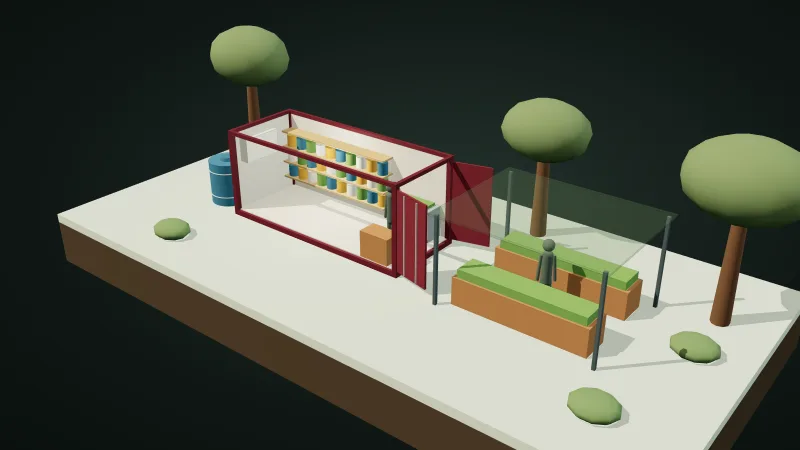 Seed BoxKeep next season's seed cool, dry and close to home.
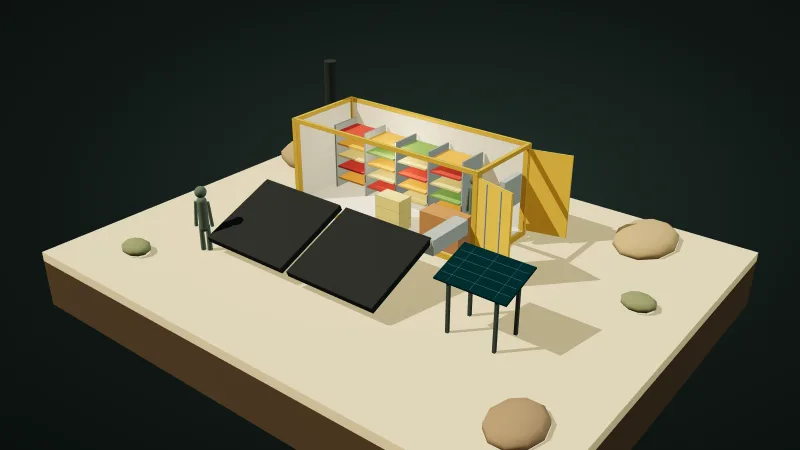 Dryer BoxDry the harvest before the mould gets to it.
 Cold RoomGive farmers a few more days to sell.