All designs
Biogas Box
Cook on yesterday's kitchen waste.
Food and animal waste breaks down in sealed tanks and gives off gas that burns cleanly in ordinary stoves. The liquid left over is fertiliser.
- Built into
- One 40 ft high-cube container
- Gas
- About 100 m³ per tonne
- A household uses
- 1–2 m³ a day
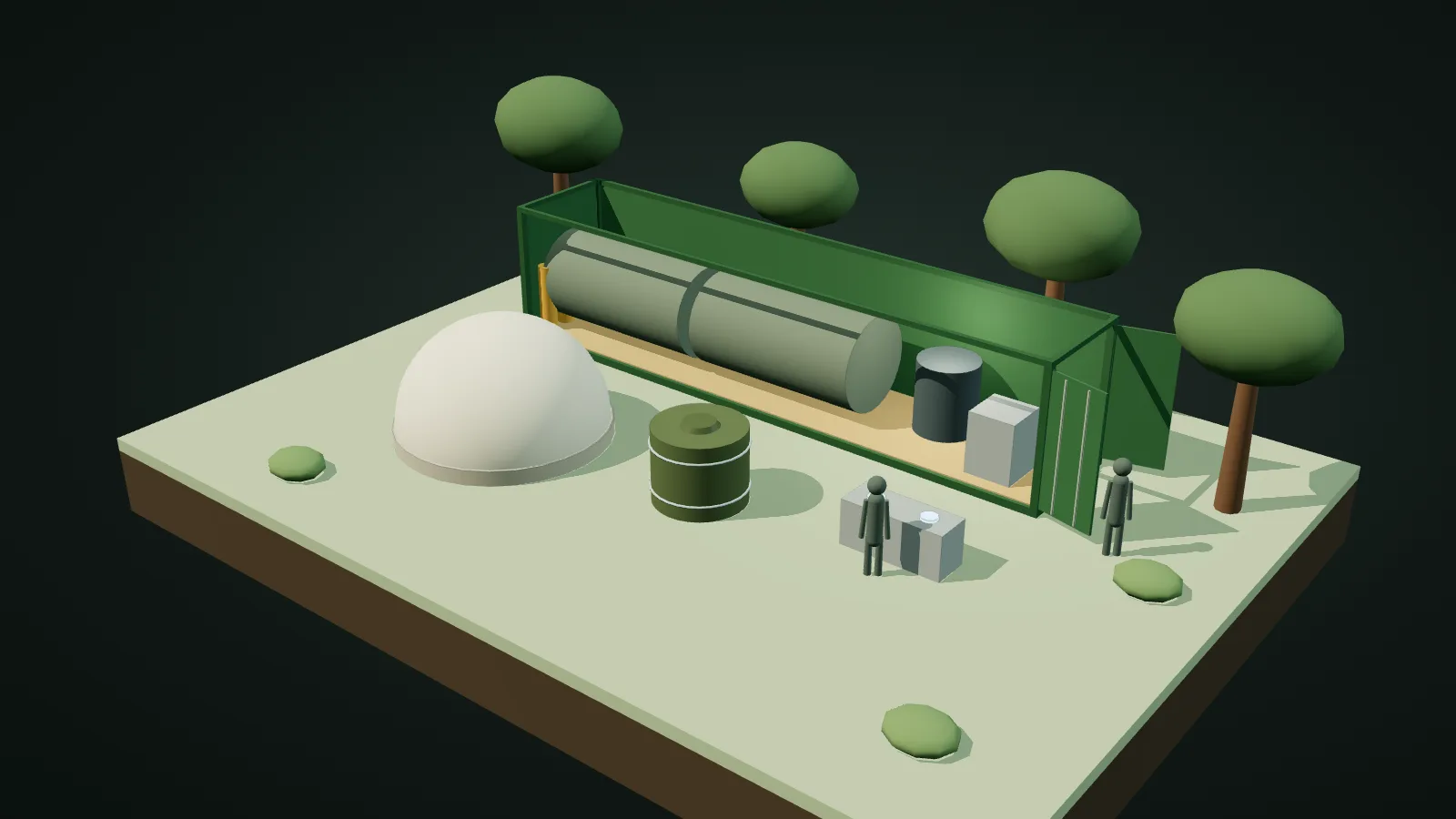
Drag to turn it around. Click any part to see what it is.
The problem
Cooking over wood or charcoal fills kitchens with smoke that harms lungs, costs hours of collecting, and strips trees, while wet waste piles up and rots.
How it works
- Waste is chopped, mixed with water and fed in at one end each day.
- Inside the sealed tanks, microbes break it down without air and release biogas.
- The gas is cleaned and held in a soft storage dome until it is needed.
- A pipe carries it to kitchen burners. The digested liquid is drawn off for fields and gardens.
Who it suits
Schools, markets, dairies and community kitchens that produce wet waste every day and cook nearby.
Rough numbers
- Footprint
- 30 m² + gas storeOne 40 ft high-cube container.
- Gas
- About 100 m³ per tonneOf food waste. Varies widely with what goes in.
- A household uses
- 1–2 m³ a dayFor cooking. A school kitchen needs many times more.
- Also makes
- Liquid fertiliserNeeds safe handling before it goes on food crops.
What it will not do
- It has to be fed every day with the right mix. Neglected, it turns sour and stops.
- The microbes need warmth. Below about 20 °C gas production falls sharply without heating.
- Biogas is flammable and contains toxic hydrogen sulphide. It needs ventilation, flame traps and a trained operator.
- It suits a kitchen next door. Piping or bottling gas over distance is a different project.
Goes well with
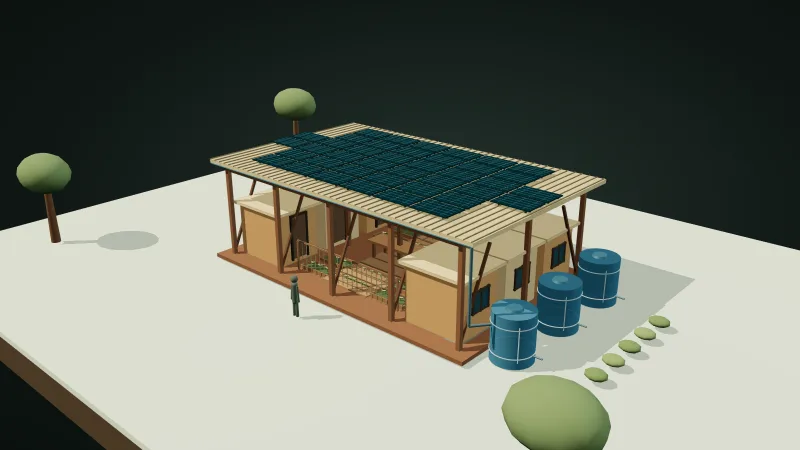 Canopy CommonsShare expensive systems. Keep private life private.
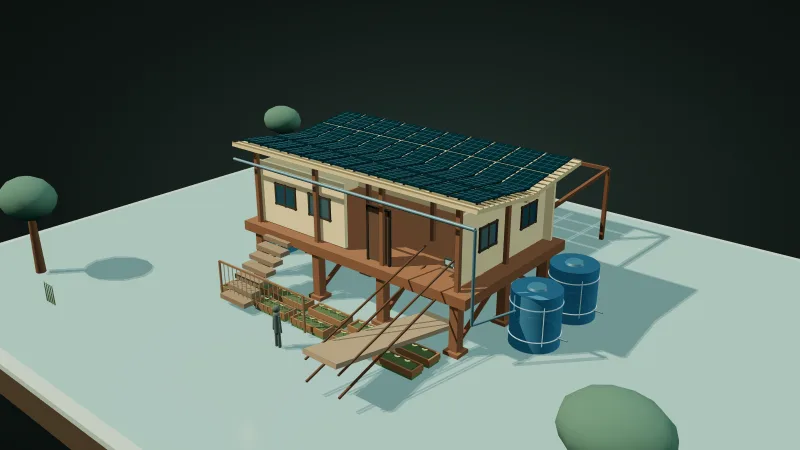 Resilience HubUseful every day. Ready on the worst day.
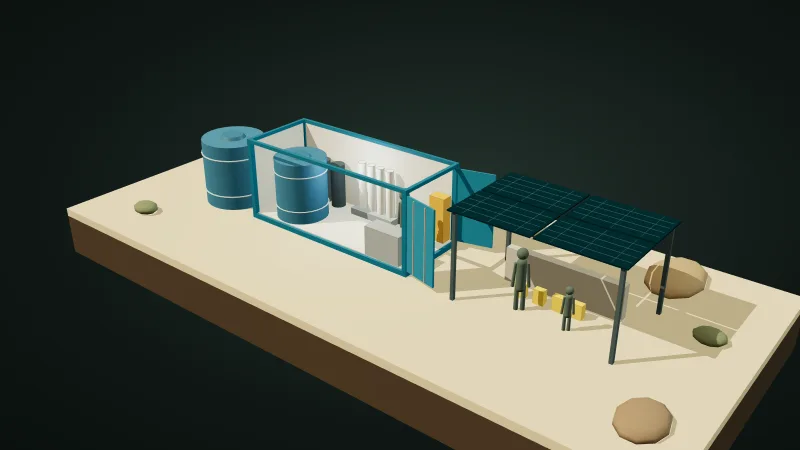 Water BoxTreat the water that is already there, and prove it is safe.
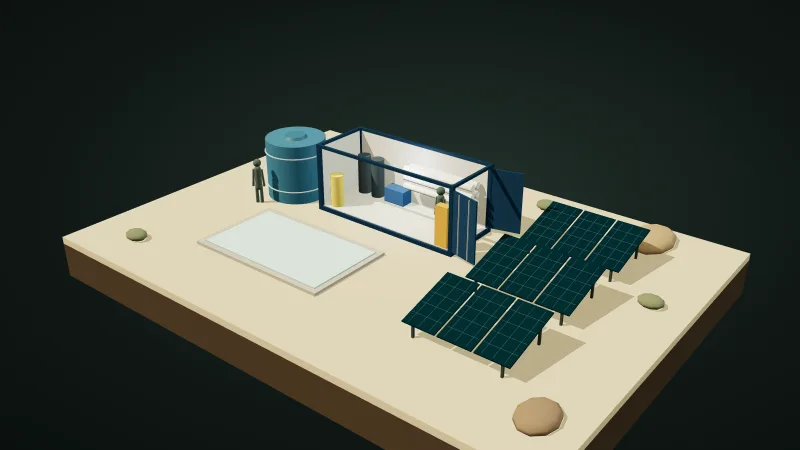 Desalination BoxDrinking water from a salty well, powered by the sun.
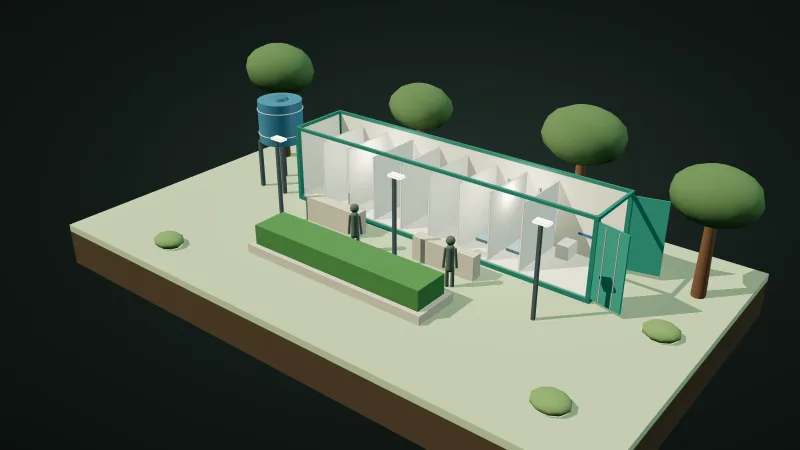 Wash BlockToilets, showers and laundry that are safe to use at night.
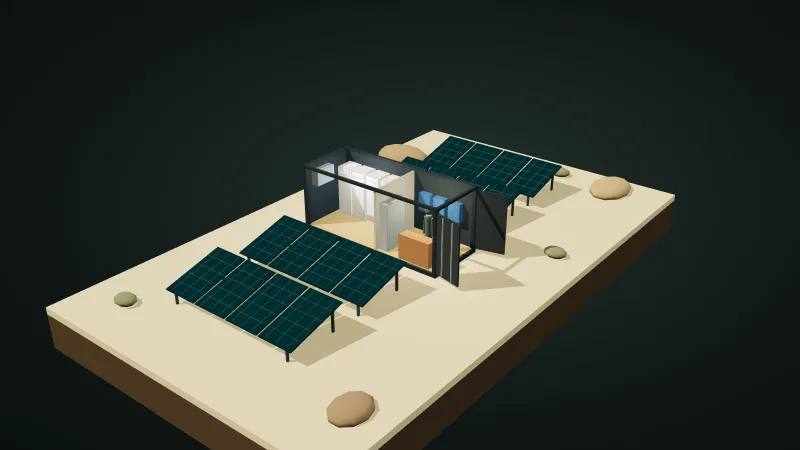 Power BoxA small grid that arrives on one truck.
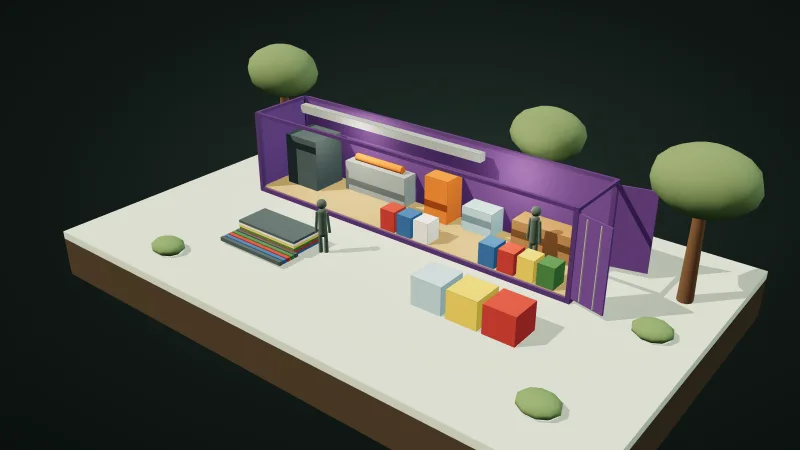 Recycling BoxGive waste plastic a price, and a second life.
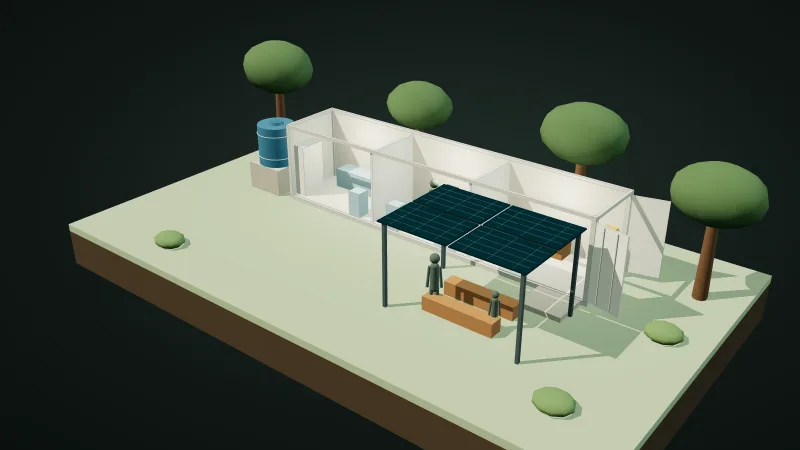 Clinic BoxTwo private rooms, cold vaccines and a working sink.
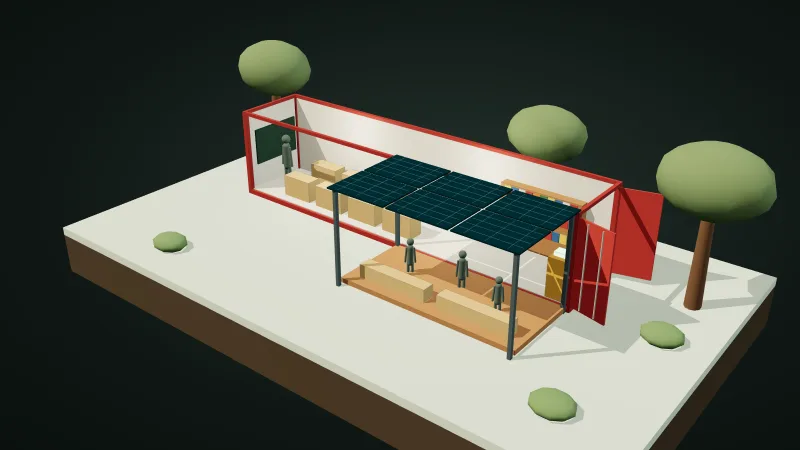 Learning BoxA classroom, a library and a signal, wherever the truck can reach.
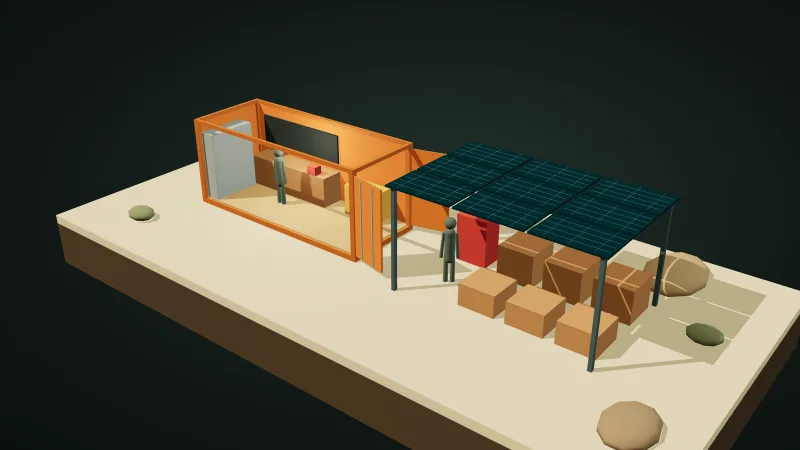 Workshop BoxKeep the tools, the spares and the skills in the neighbourhood.