All designs
Power Box
A small grid that arrives on one truck.
Batteries, inverters and switchgear are installed and tested in the container before it ships. On site, the solar array unfolds onto ground frames and the box becomes the plant room.
- Built into
- One 20 ft container
- Solar
- 20–50 kW
- Storage
- 60–200 kWh
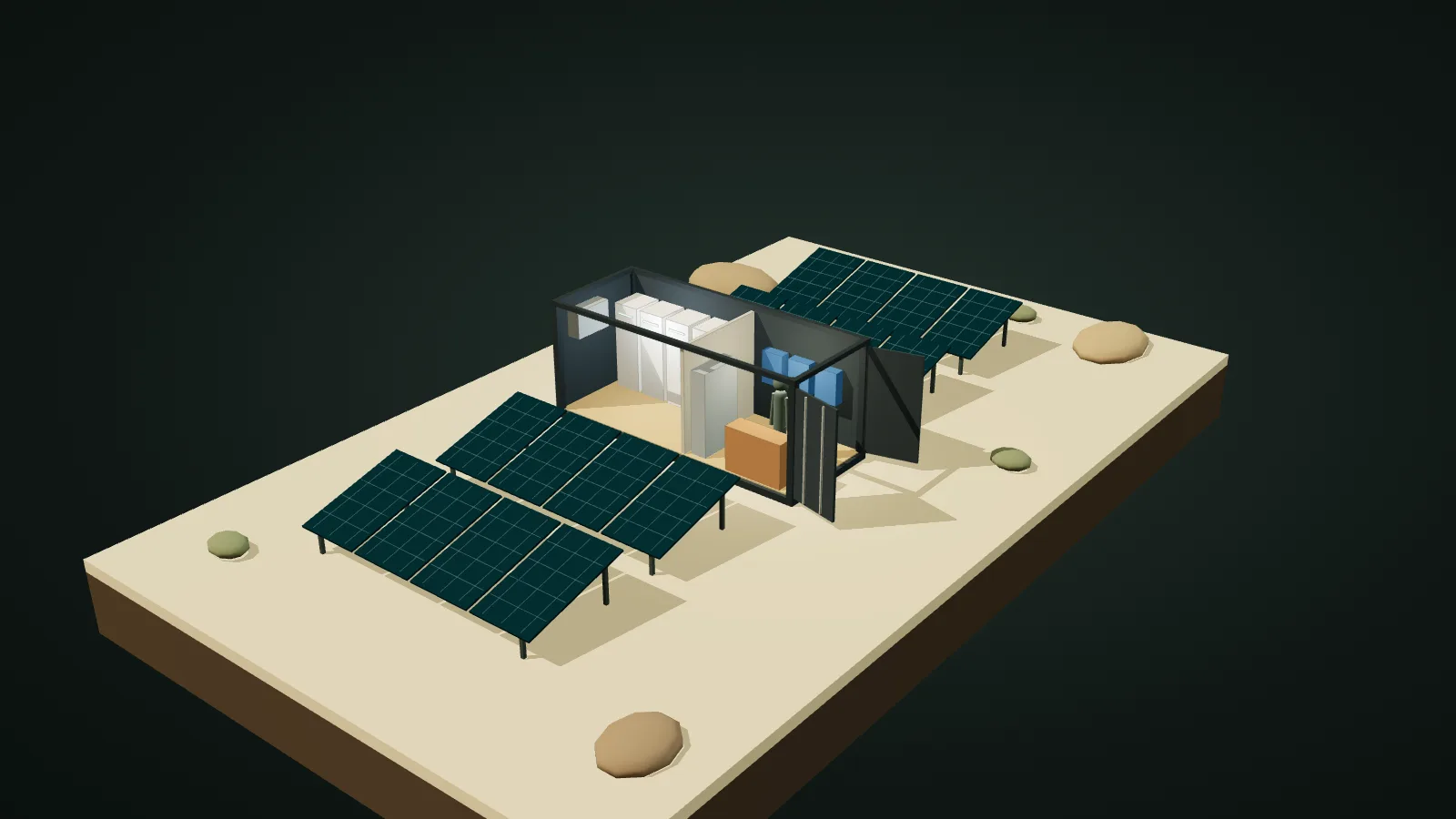
Drag to turn it around. Click any part to see what it is.
The problem
Clinics, schools, pumps and workshops stall without dependable electricity, and diesel is costly to buy and haul. Building a plant room from scratch on a remote site is slow and easy to get wrong.
How it works
- Solar frames pack inside for transport and are set out beside the box on arrival.
- Battery racks sit in their own ventilated bay, separated from the switch room.
- Inverters feed a board with named circuits, so essential loads stay on when others are shed.
- A counter by the door works as a phone and lantern charging point.
Who it suits
A cluster of buildings within a few hundred metres: a clinic and school, a market, or one of the larger habitat designs.
Rough numbers
- Footprint
- 15 m² + arrayThe array needs roughly 10 m² of open ground per kilowatt.
- Solar
- 20–50 kWSized from measured loads, not from the box.
- Storage
- 60–200 kWhLithium iron phosphate racks, replaceable one at a time.
- Backup
- Generator inletFor long cloudy spells and maintenance.
What it will not do
- Protection, earthing and cable sizing need a qualified electrician and a local approval.
- Someone has to decide who gets how much power and what it costs. That is harder than the hardware.
- Batteries wear out. A replacement fund has to start on day one.
- Batteries need fire separation and ventilation, and the box must sit above any flood level.
Goes well with
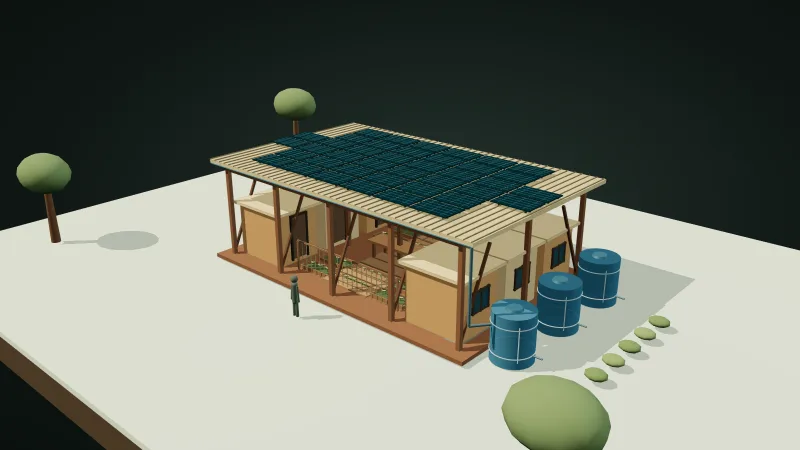 Canopy CommonsShare expensive systems. Keep private life private.
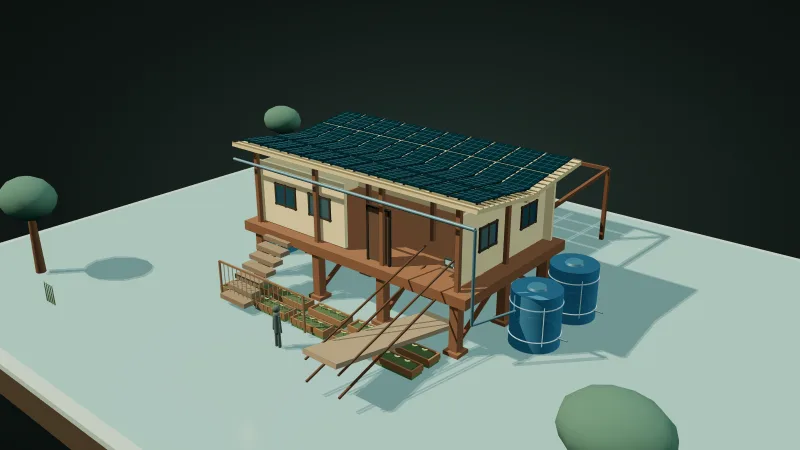 Resilience HubUseful every day. Ready on the worst day.
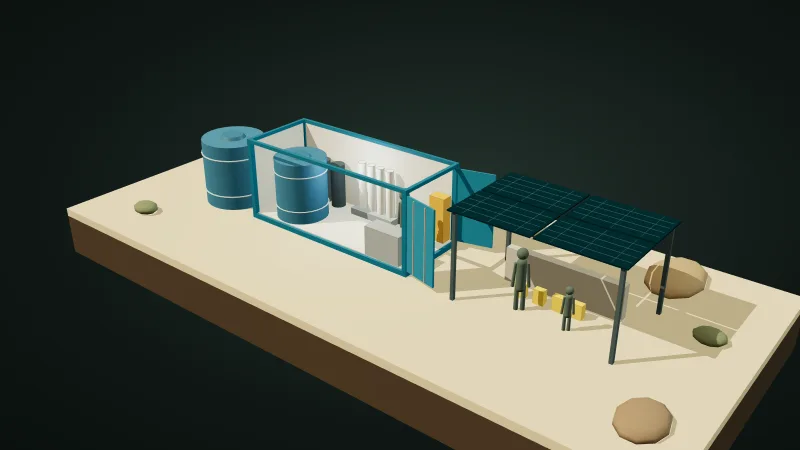 Water BoxTreat the water that is already there, and prove it is safe.
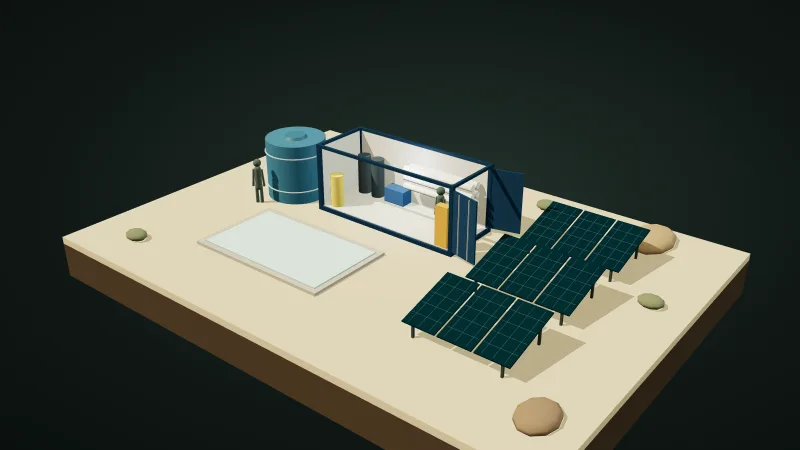 Desalination BoxDrinking water from a salty well, powered by the sun.
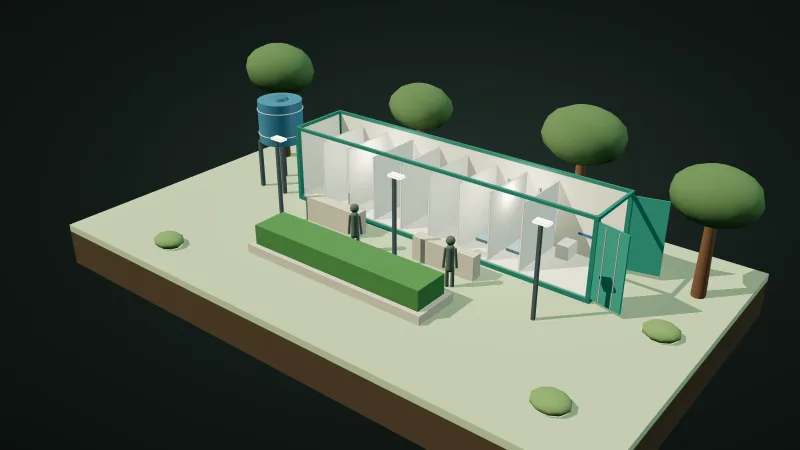 Wash BlockToilets, showers and laundry that are safe to use at night.
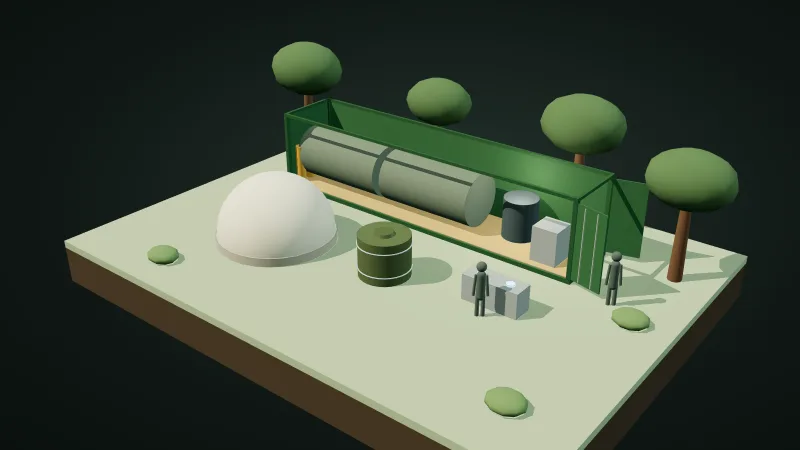 Biogas BoxCook on yesterday's kitchen waste.
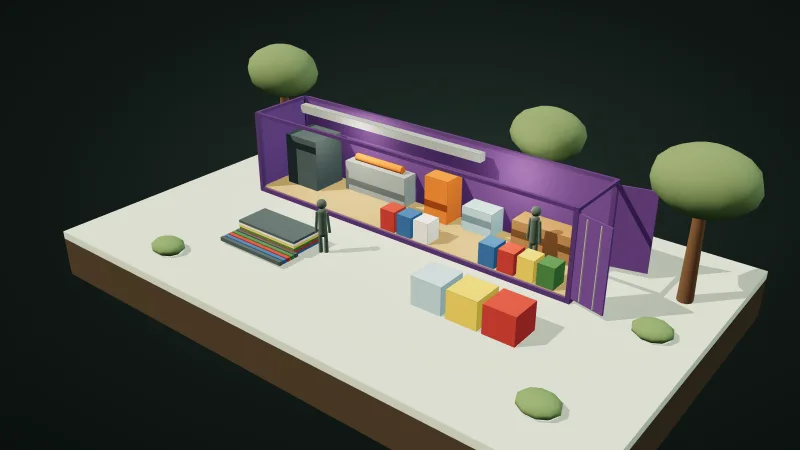 Recycling BoxGive waste plastic a price, and a second life.
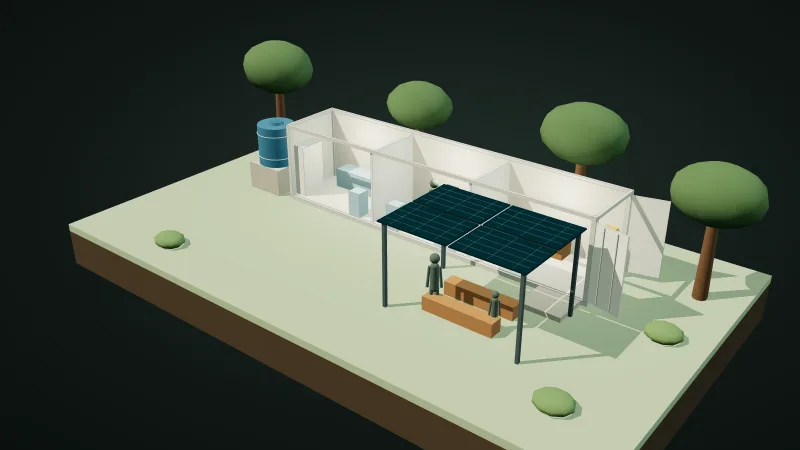 Clinic BoxTwo private rooms, cold vaccines and a working sink.
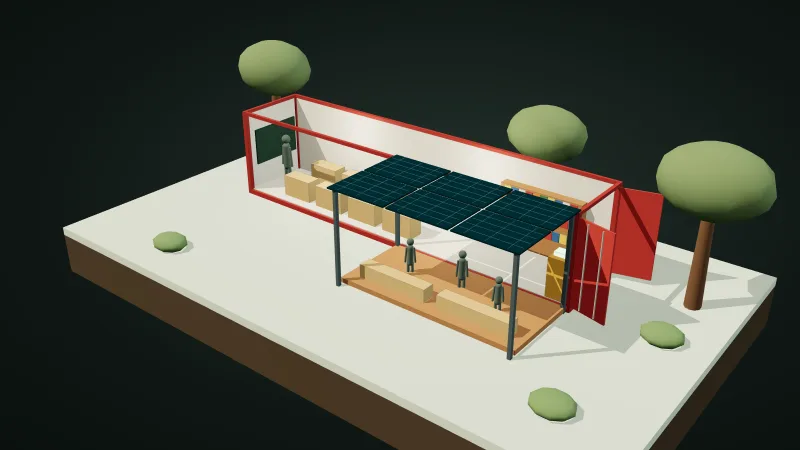 Learning BoxA classroom, a library and a signal, wherever the truck can reach.
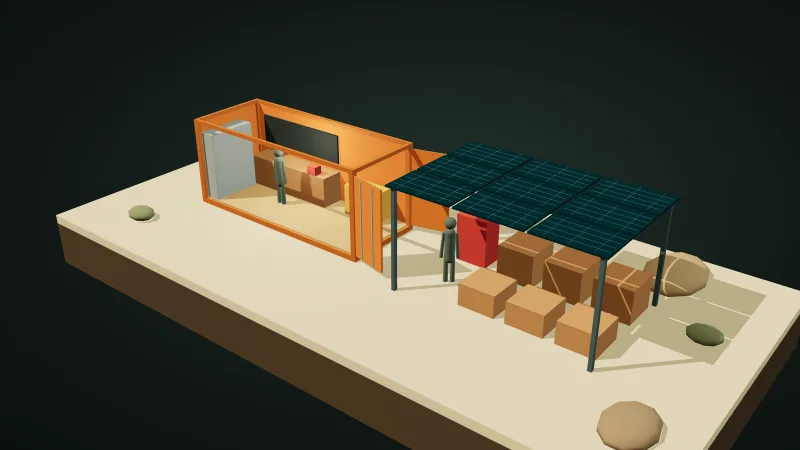 Workshop BoxKeep the tools, the spares and the skills in the neighbourhood.