All designs
Water Box
Treat the water that is already there, and prove it is safe.
A small treatment plant and tap stand in one container: settling, filtration, disinfection, clean storage and a place to sample and record results.
- Built into
- One 20 ft container
- Output
- 5,000–20,000 L a day
- Serves
- 250–1,000 people
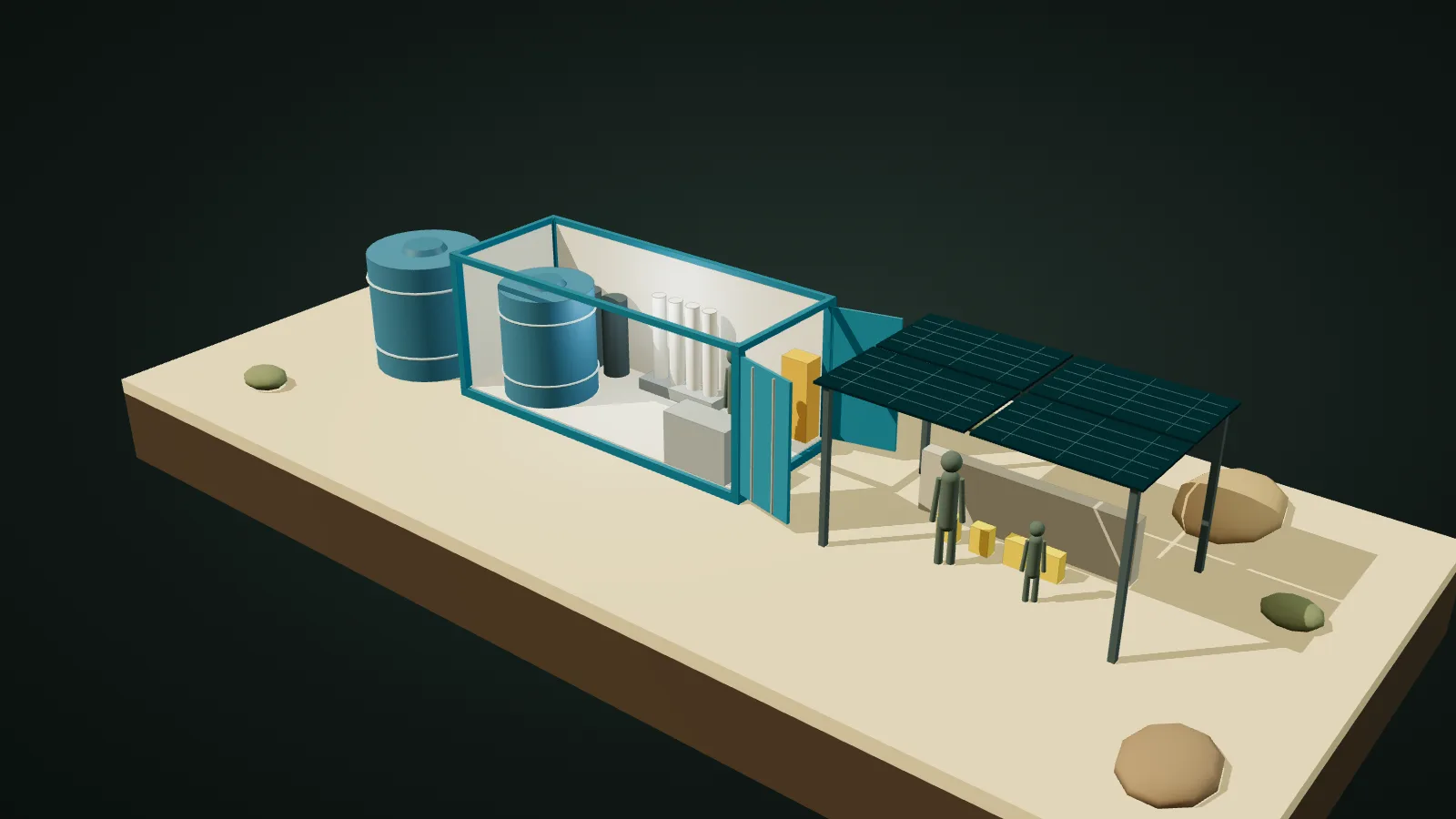
Drag to turn it around. Click any part to see what it is.
The problem
Many communities have a water source nearby, but it is not safe to drink. Household filters get lost or neglected; a shared, staffed point with testing is easier to keep working.
How it works
- Raw water from a well, river or roof is pumped into a settling tank outside.
- It passes through coarse filters and an ultrafiltration membrane that removes bacteria and most particles.
- A small dose of chlorine keeps the water safe while it sits in the clean tank and in people's containers.
- People fill up at a shaded tap stand. The operator samples the water on a schedule and posts the results.
Who it suits
Villages, schools, markets and health posts with a known source and a person or group paid to operate it.
Rough numbers
- Footprint
- 15 m² + tap standOne 20 ft container.
- Output
- 5,000–20,000 L a dayDepends on source water quality and membrane size.
- Serves
- 250–1,000 peopleAt 20 L per person per day for drinking, cooking and basic hygiene.
- Electricity
- 1–3 kW of solarPumps and controls. Desalination would need far more.
What it will not do
- It does not make water. If the source runs dry, so do the taps.
- Membranes and chlorine do not remove salt, arsenic or fluoride. Those need different treatment, more energy and a plan for the waste.
- The treatment train is chosen after the source has been tested, not before.
- Filters, chlorine and test kits are recurring costs. A fee or a budget has to cover them.
Goes well with
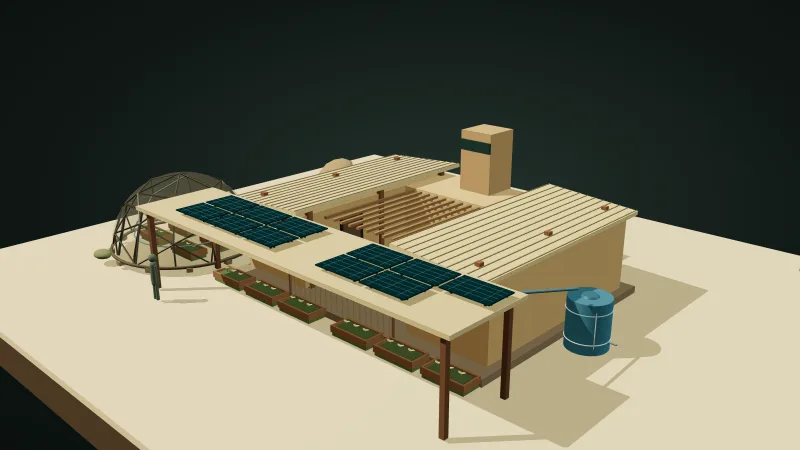 Sunwell CompoundMake shade first. Treat every litre as valuable.
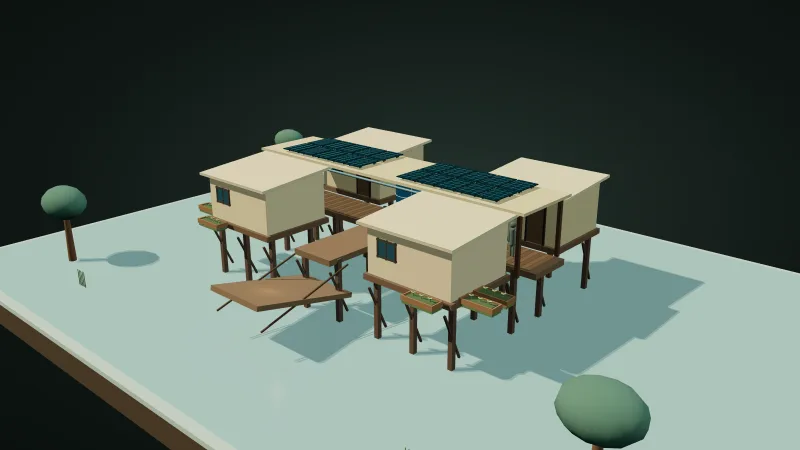 Delta WalkwayKeep daily life above water without blocking the water.
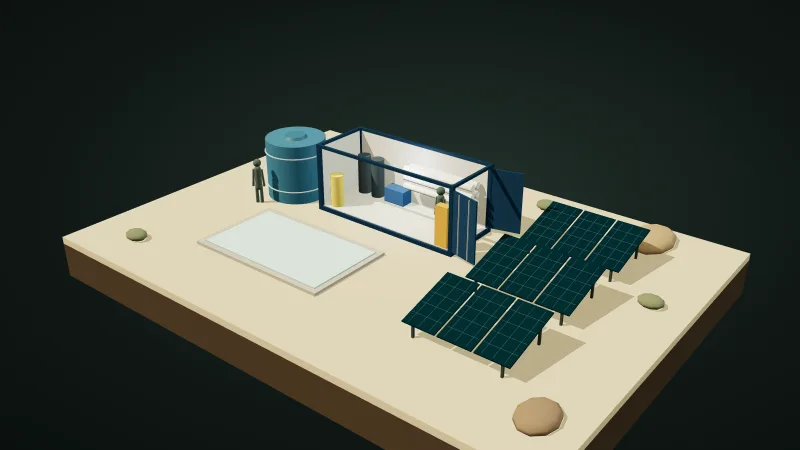 Desalination BoxDrinking water from a salty well, powered by the sun.
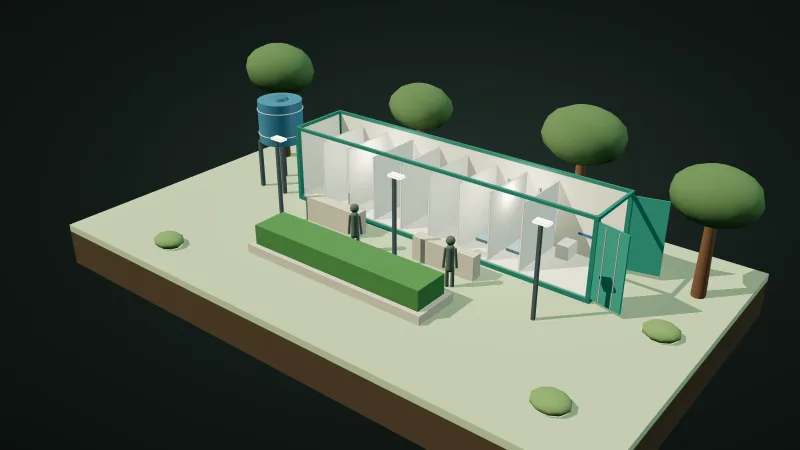 Wash BlockToilets, showers and laundry that are safe to use at night.
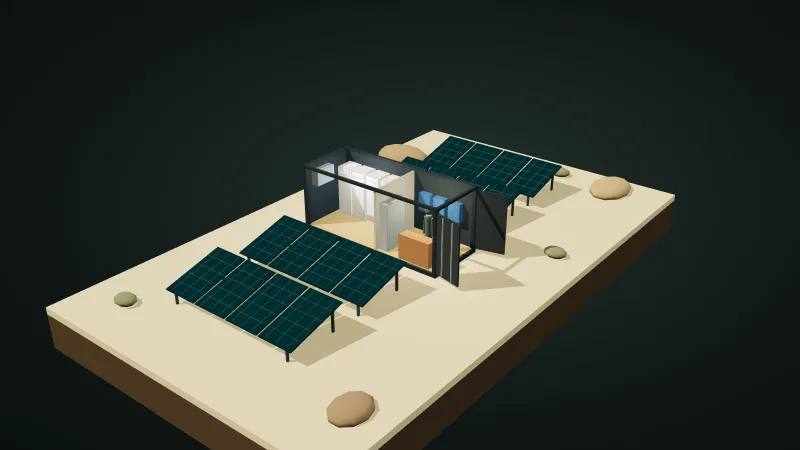 Power BoxA small grid that arrives on one truck.
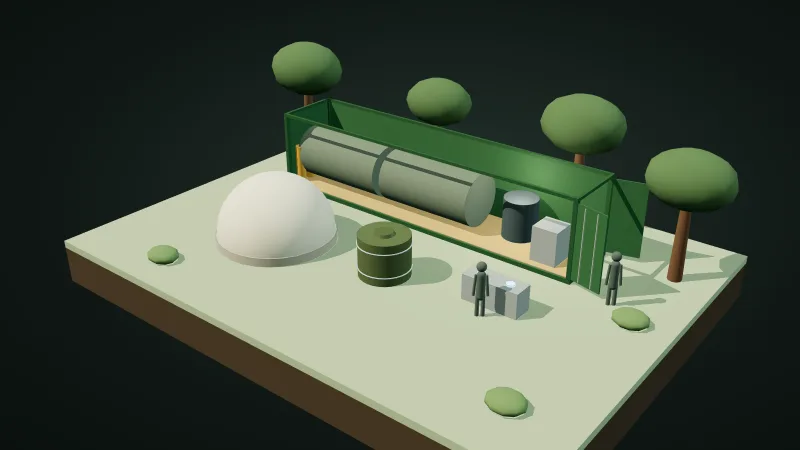 Biogas BoxCook on yesterday's kitchen waste.
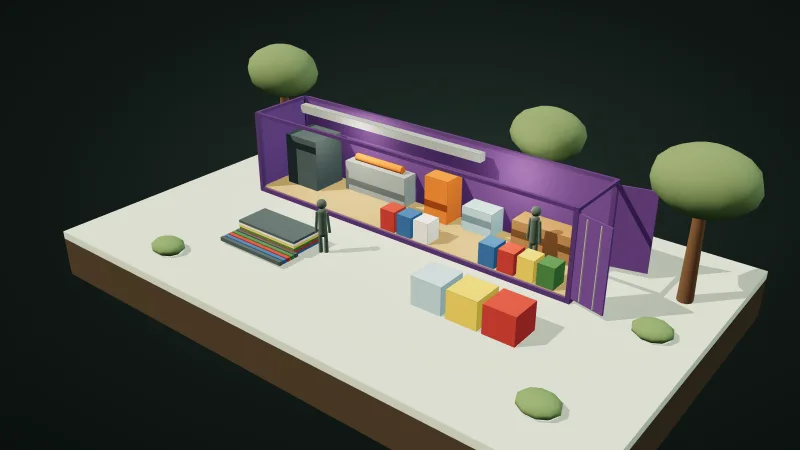 Recycling BoxGive waste plastic a price, and a second life.
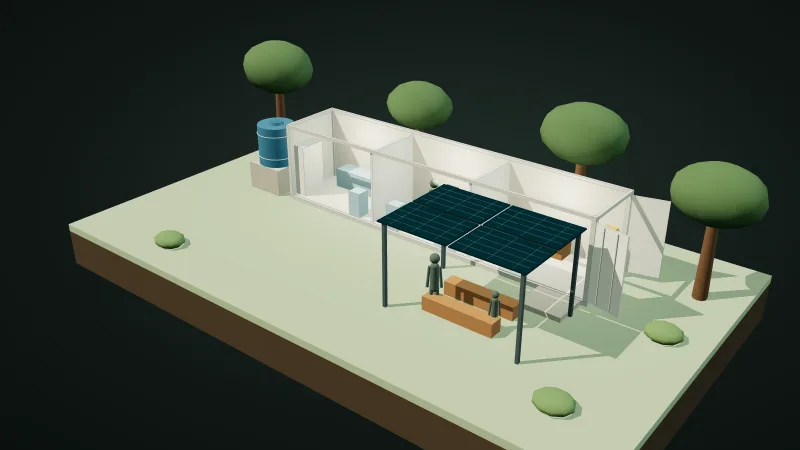 Clinic BoxTwo private rooms, cold vaccines and a working sink.
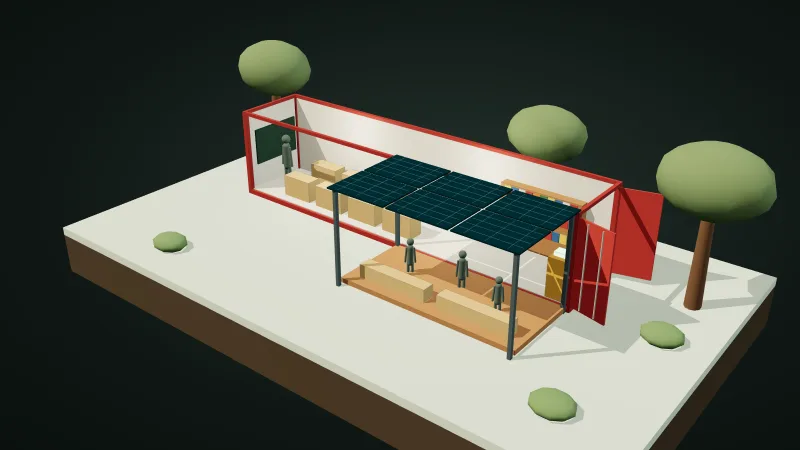 Learning BoxA classroom, a library and a signal, wherever the truck can reach.
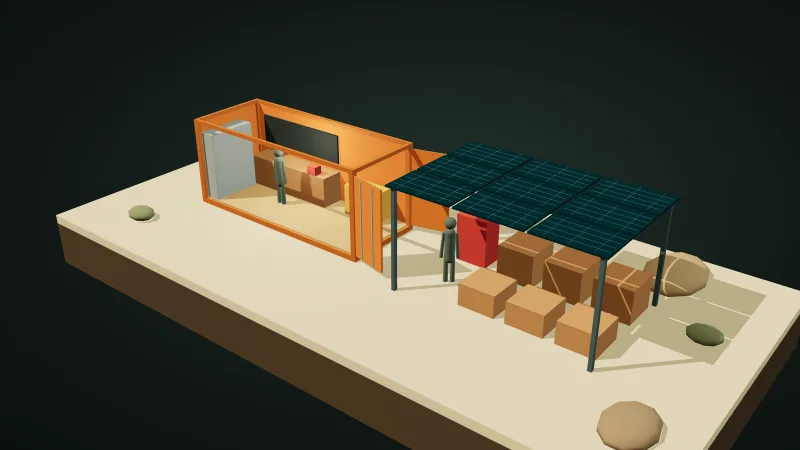 Workshop BoxKeep the tools, the spares and the skills in the neighbourhood.