All designs
Desalination Box
Drinking water from a salty well, powered by the sun.
A solar-powered reverse osmosis plant for brackish wells and coastlines. High pressure pushes water through membranes that hold back the salt.
- Built into
- One 20 ft container
- Output
- 5,000–20,000 L a day
- Energy
- 1–3 kWh per 1,000 L
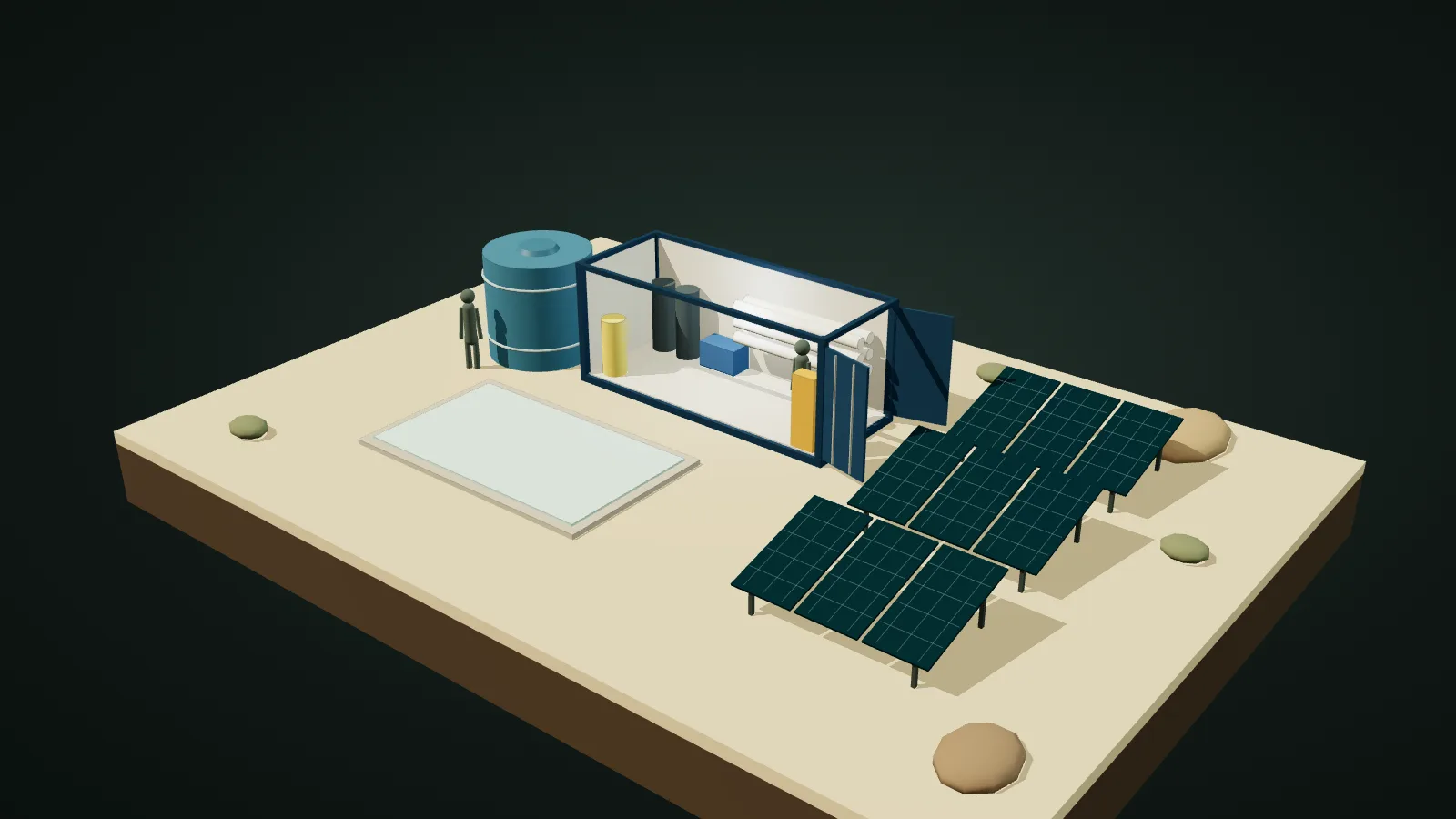
Drag to turn it around. Click any part to see what it is.
The problem
On islands, coasts and dry inland plains, the only groundwater is often too salty to drink, and trucked water costs more than families can pay.
How it works
- Well or sea water is filtered to protect the membranes.
- A pump raises the pressure and forces fresh water through the membrane tubes, leaving salt behind.
- Minerals and a little chlorine are added back so the water tastes right and stays safe.
- The salty leftover, called brine, goes to a lined pond or back to the sea under local rules.
Who it suits
Coastal villages, islands and dryland communities with no fresh source, a salty one, and plenty of sun.
Rough numbers
- Footprint
- 15 m² + pond and panelsOne 20 ft container.
- Output
- 5,000–20,000 L a dayFrom brackish water. Less from seawater with the same equipment.
- Energy
- 1–3 kWh per 1,000 LFor brackish water. Seawater takes several times more.
- Solar
- 5–25 kWDepends on how salty the water is. Runs in daylight and stores water rather than electricity.
What it will not do
- A large share of the water taken in leaves as brine. Inland, getting rid of it safely is the hardest part.
- It costs more per litre than treating fresh water. It is for places with no better source.
- Membranes foul and scale. They need pre-treatment, chemicals and a trained operator.
- Pumping a coastal well harder can pull in more salt and make the problem worse.
Goes well with
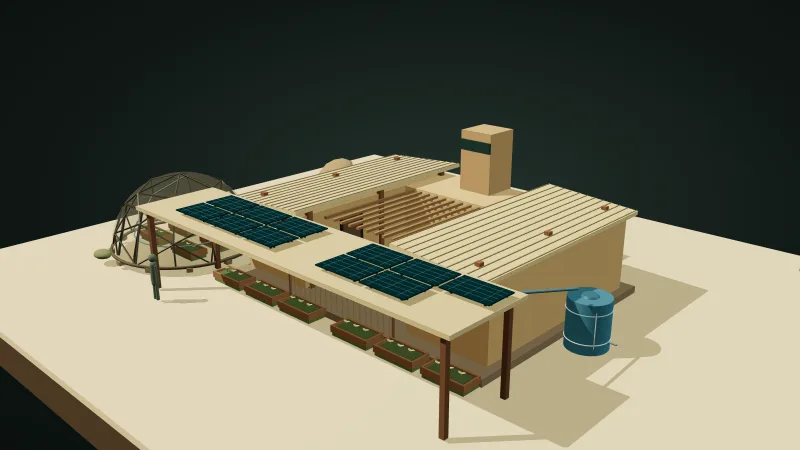 Sunwell CompoundMake shade first. Treat every litre as valuable.
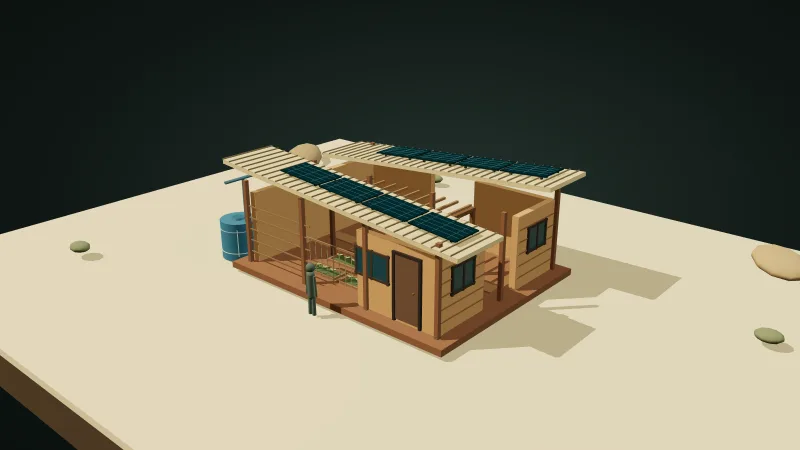 Earth CourtyardA home shaped around daily life.
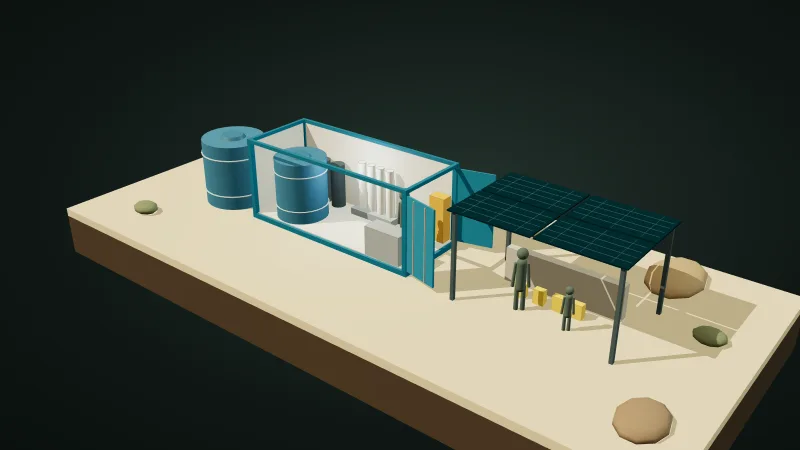 Water BoxTreat the water that is already there, and prove it is safe.
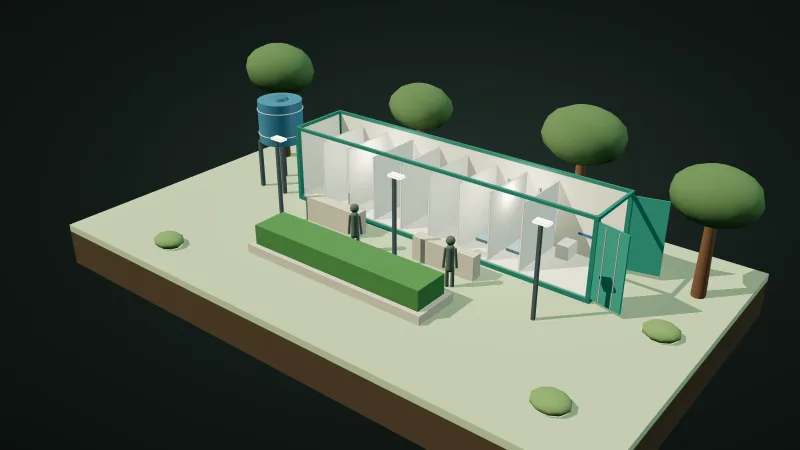 Wash BlockToilets, showers and laundry that are safe to use at night.
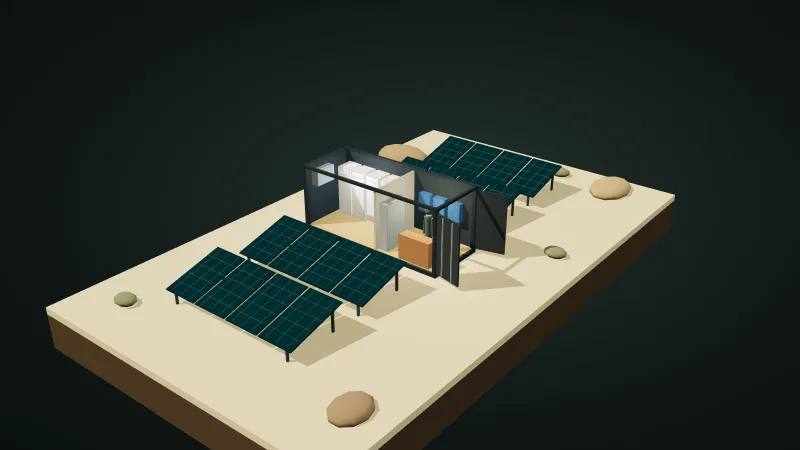 Power BoxA small grid that arrives on one truck.
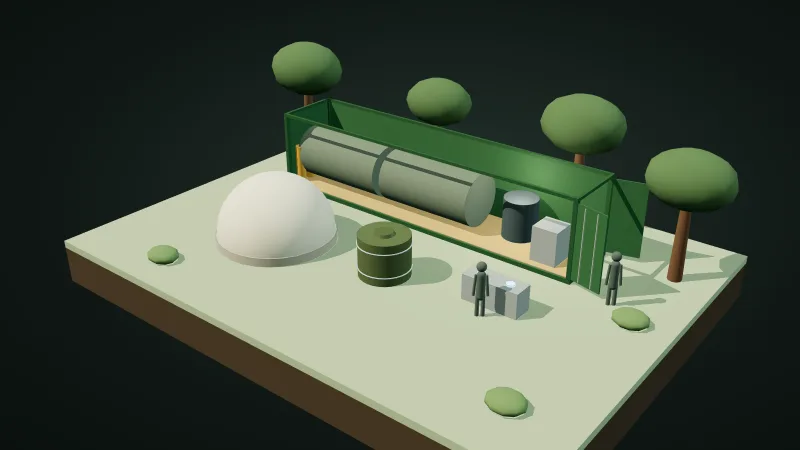 Biogas BoxCook on yesterday's kitchen waste.
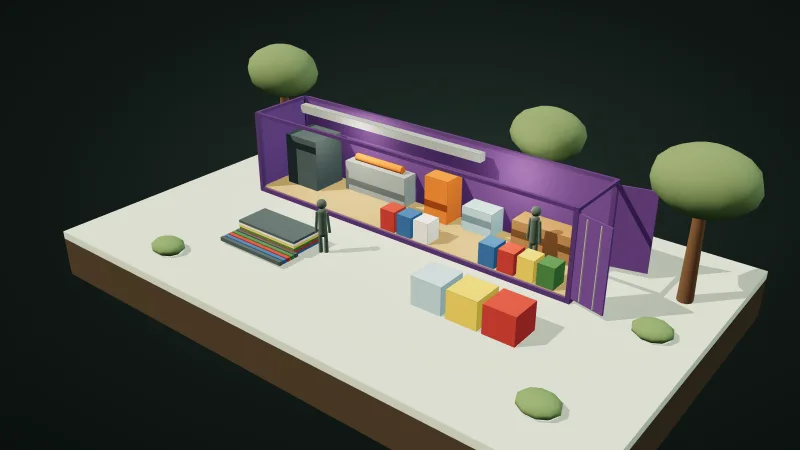 Recycling BoxGive waste plastic a price, and a second life.
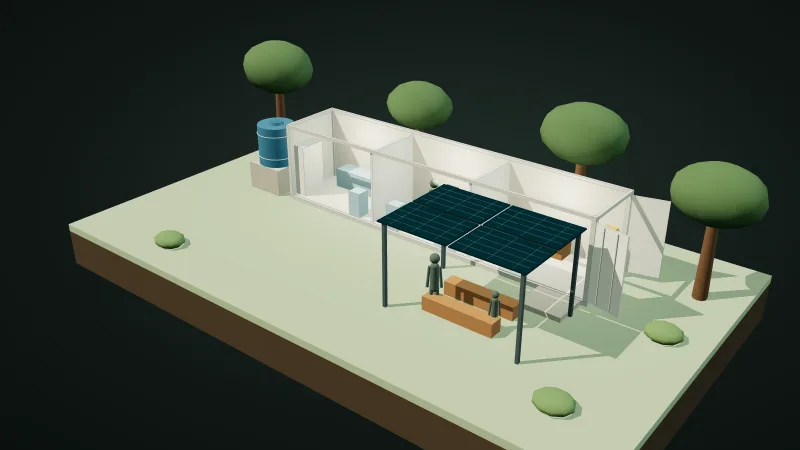 Clinic BoxTwo private rooms, cold vaccines and a working sink.
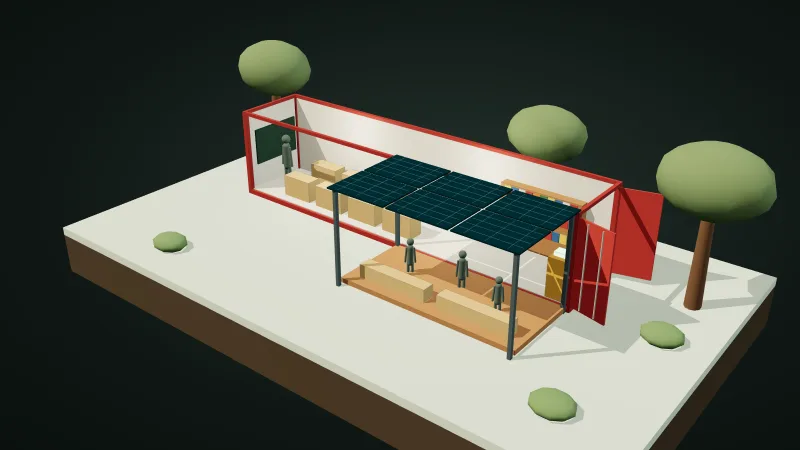 Learning BoxA classroom, a library and a signal, wherever the truck can reach.
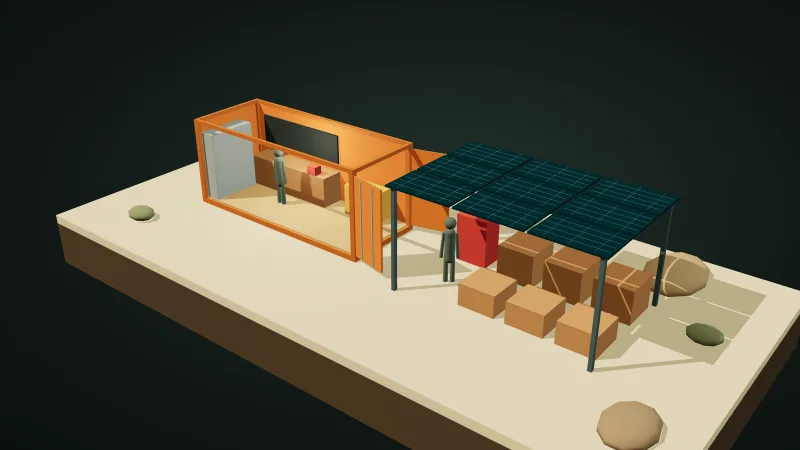 Workshop BoxKeep the tools, the spares and the skills in the neighbourhood.