All designs
Recycling Box
Give waste plastic a price, and a second life.
A small plastics workshop. Collected bottles, tubs and caps are sorted, washed, shredded and melted into boards, beams and tiles that people will pay for.
- Built into
- One 40 ft high-cube container
- Throughput
- Tens of kg a day
- Power
- 3–15 kW when running
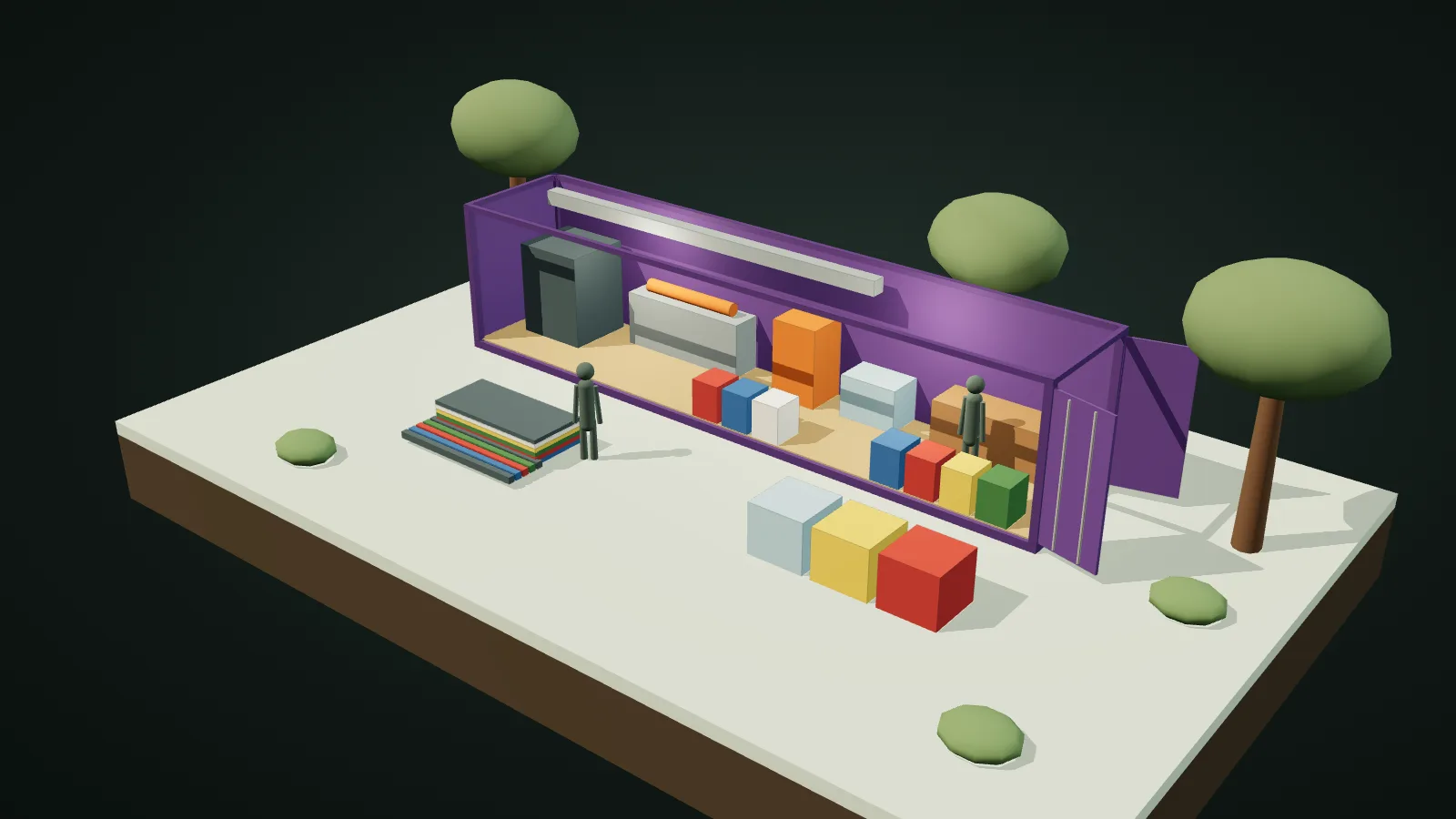
Drag to turn it around. Click any part to see what it is.
The problem
Where there is no collection, plastic is burned or dumped because it is worth nothing. Burning it poisons the air; dumping it blocks drains and causes floods.
How it works
- Collectors are paid by weight. Plastic is sorted by type and colour, because types cannot be mixed.
- It is washed, dried and shredded into flakes.
- Flakes are melted and pushed through an extruder to make beams, or pressed into sheets.
- The products are sold locally as furniture, roofing tiles, fence posts and boards.
Who it suits
Towns and settlements with plenty of plastic waste, a few people who want the work, and customers for building products.
Rough numbers
- Footprint
- 30 m² + yardOne 40 ft high-cube container and a storage yard.
- Throughput
- Tens of kg a dayLimited by sorting and washing more than by the machines.
- Power
- 3–15 kW when runningShredder, extruder and press. Usually grid or generator backed.
- Jobs
- 3–8Collection, sorting, machine operation and sales.
What it will not do
- Only clean, sorted plastic works, mainly the types marked 2 and 5. PVC must be kept out because it gives off toxic fumes.
- Melting plastic needs fume extraction and temperature control to protect the workers.
- Wash water carries plastic fragments and has to be filtered before it is released.
- It handles a small part of the waste. It does not replace collection, or using less plastic.
Goes well with
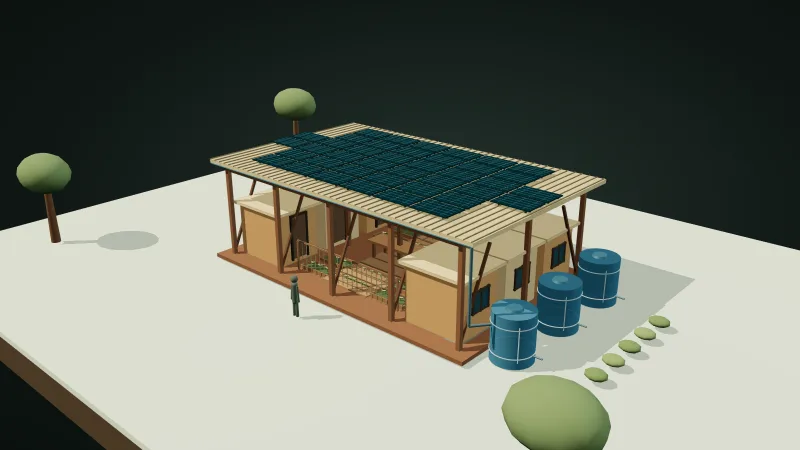 Canopy CommonsShare expensive systems. Keep private life private.
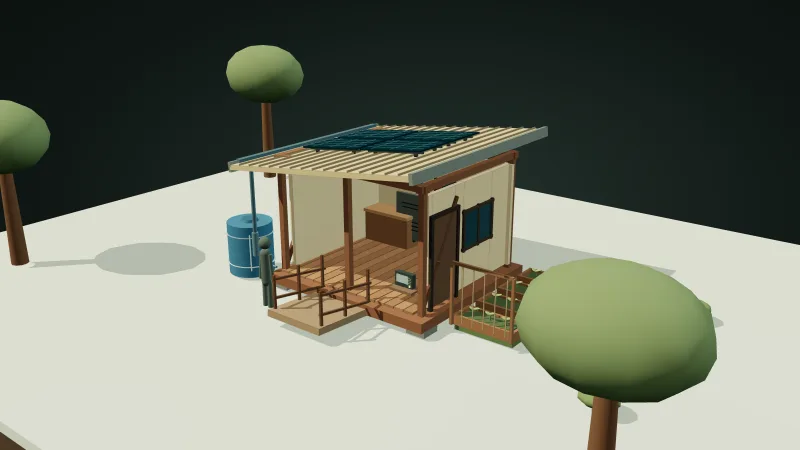 Rapid CoreSafety now. A path forward later.
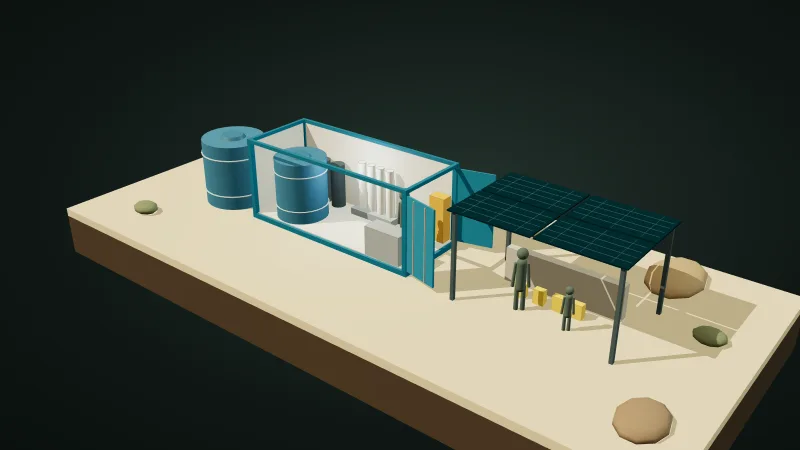 Water BoxTreat the water that is already there, and prove it is safe.
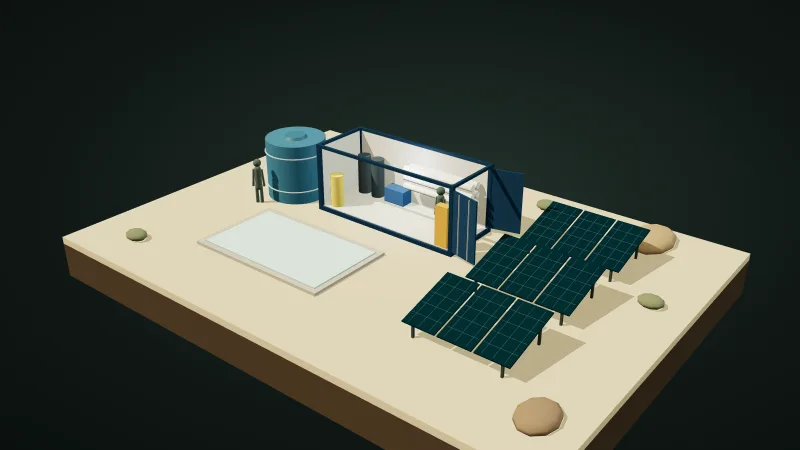 Desalination BoxDrinking water from a salty well, powered by the sun.
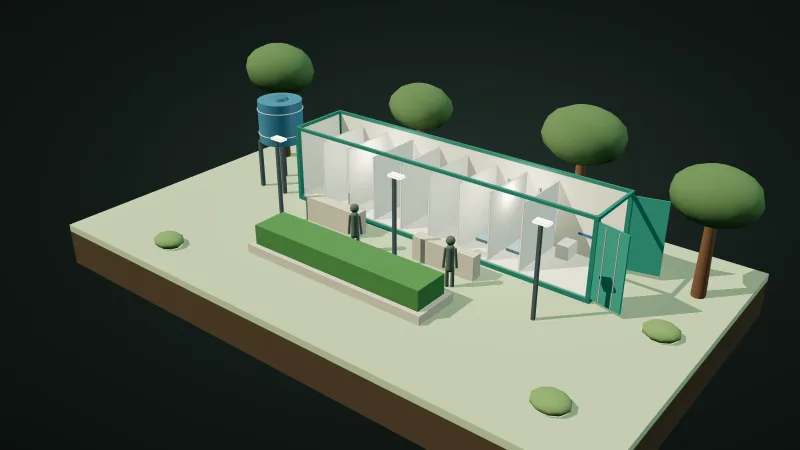 Wash BlockToilets, showers and laundry that are safe to use at night.
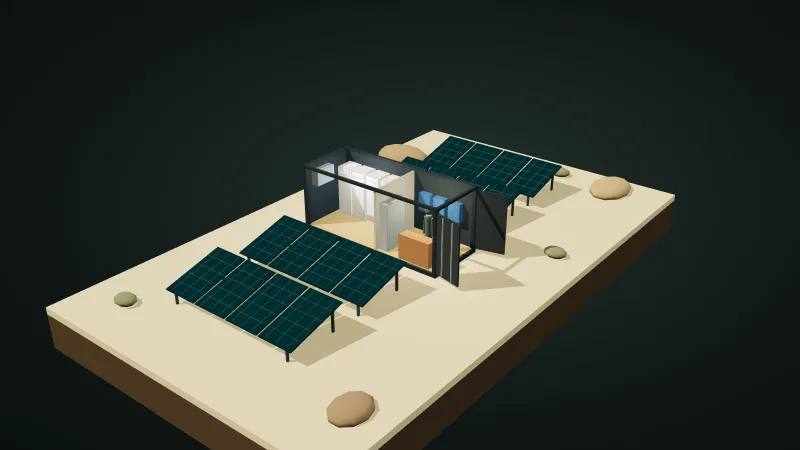 Power BoxA small grid that arrives on one truck.
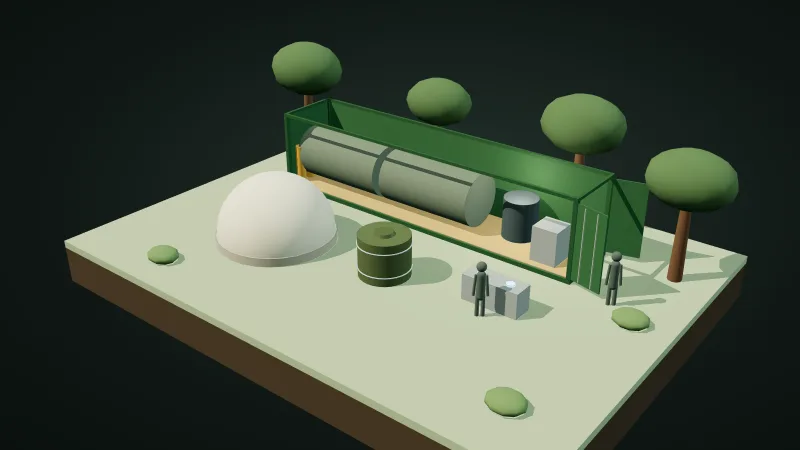 Biogas BoxCook on yesterday's kitchen waste.
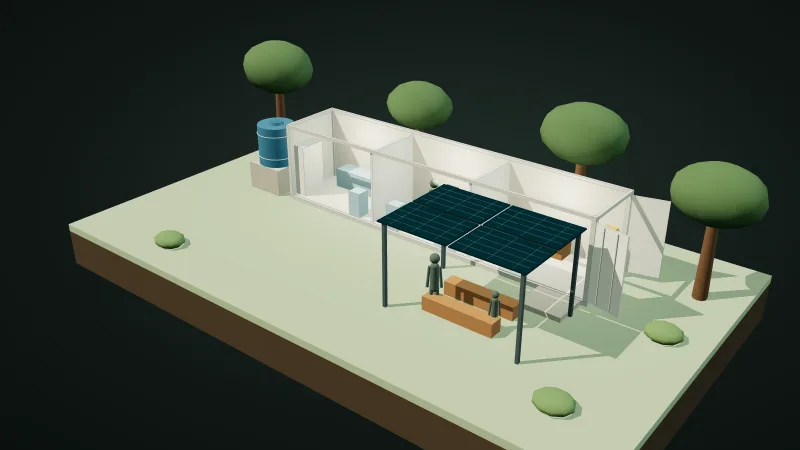 Clinic BoxTwo private rooms, cold vaccines and a working sink.
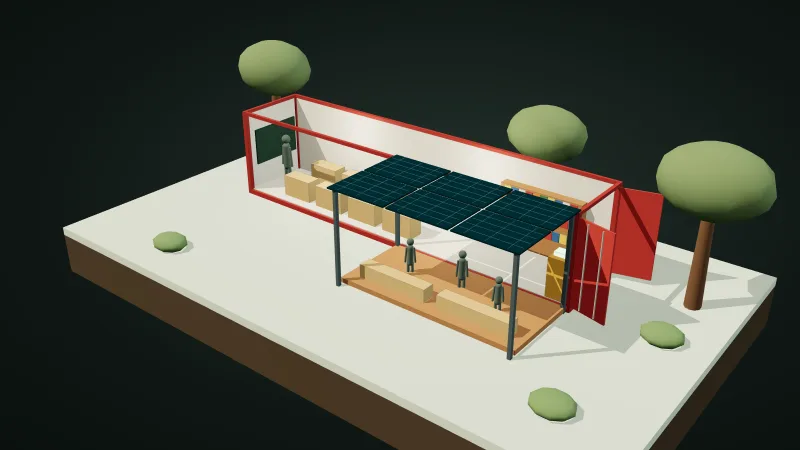 Learning BoxA classroom, a library and a signal, wherever the truck can reach.
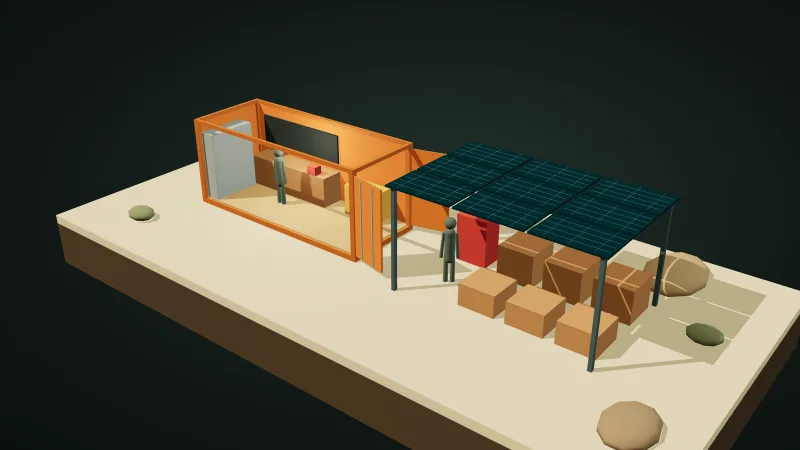 Workshop BoxKeep the tools, the spares and the skills in the neighbourhood.