All designs
Learning Box
A classroom, a library and a signal, wherever the truck can reach.
Desks, books, a charging locker of shared tablets and an offline library on a small server. One side opens onto a shaded deck that doubles the teaching space.
- Built into
- One 40 ft high-cube container
- Seats
- 20–30
- Solar
- 2–4 kW
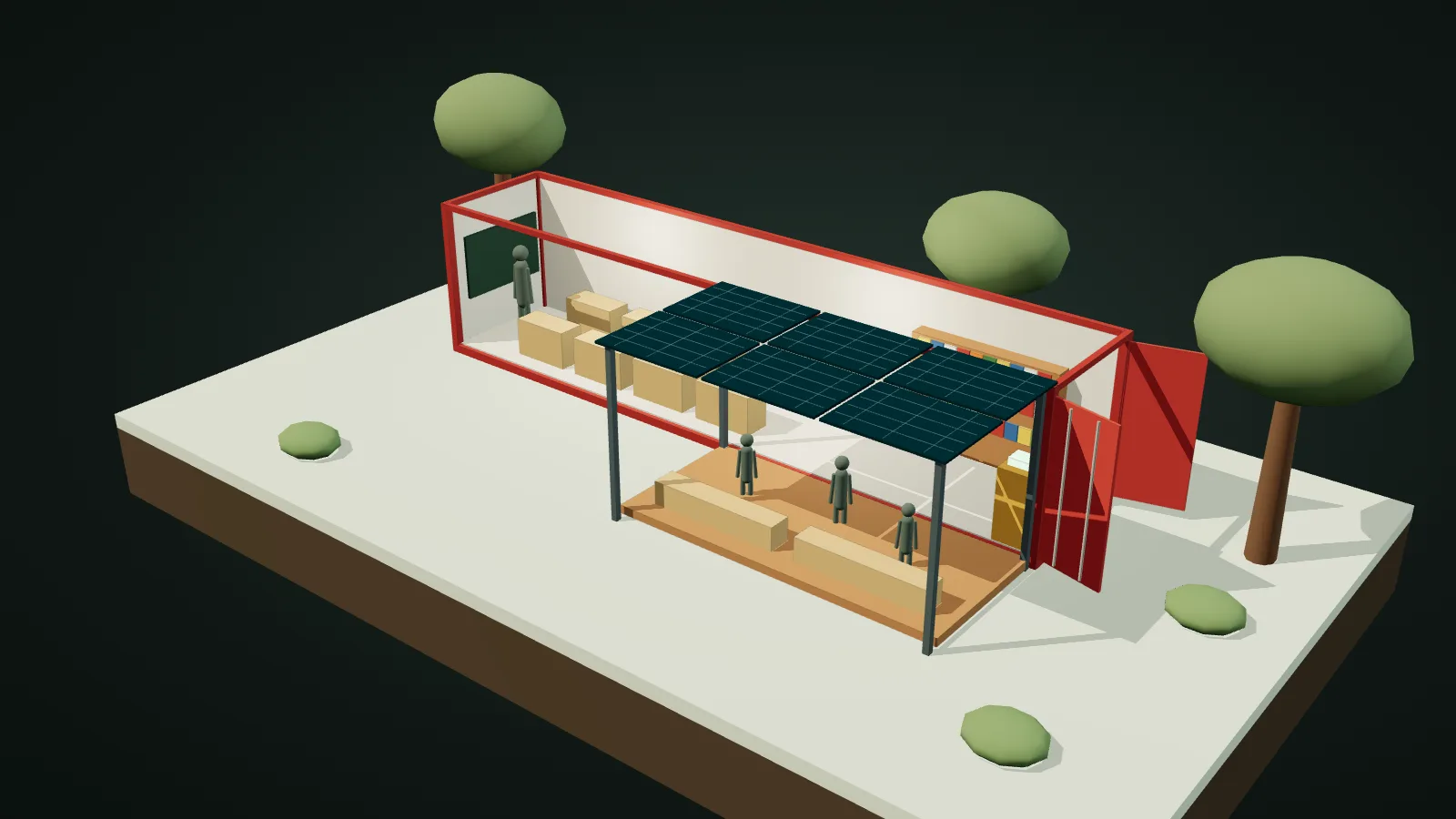
Drag to turn it around. Click any part to see what it is.
The problem
After a disaster, or far from any town, children can go years without a classroom, books or electricity to study by.
How it works
- Part of the long side folds down into a deck, and the awning above it carries the solar panels.
- Books and learning materials line the back wall. Tablets charge in a locked cabinet.
- A small server holds an offline encyclopedia, lessons and videos, reachable over local Wi-Fi with no internet.
- In the evening the same room serves adult classes, meetings and exam study under good light.
Who it suits
Education programmes and communities that have teachers but no building, or a building with no power or books.
Rough numbers
- Footprint
- 30 m² + 20 m² deckOne 40 ft high-cube container.
- Seats
- 20–30Inside and on the deck, in shifts through the day.
- Solar
- 2–4 kWLights, fans, server and device charging.
- Library
- Works offlineContent is updated by swapping a drive. Internet is optional.
What it will not do
- Teachers matter more than tablets. The box supports teaching; it does not replace it.
- Devices break and batteries fade. Repair and replacement need a budget from the start.
- A steel box is hot in sun and loud in rain. Insulation, shade and openings are essential.
- Children need supervision and safeguarding, and the content needs someone to choose it.
Goes well with
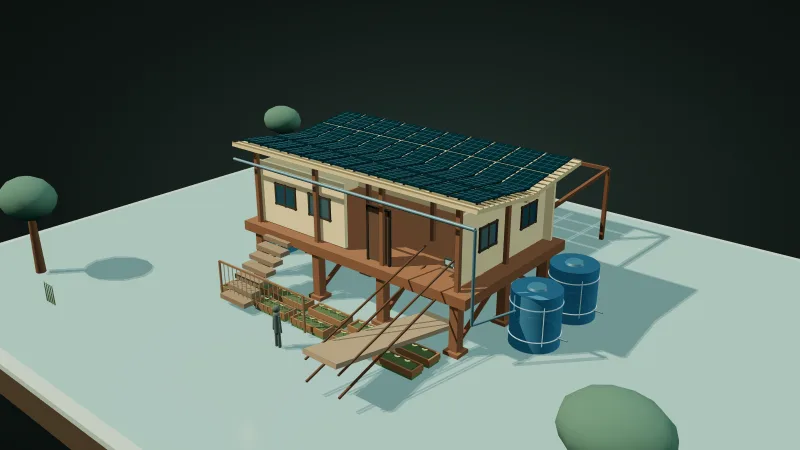 Resilience HubUseful every day. Ready on the worst day.
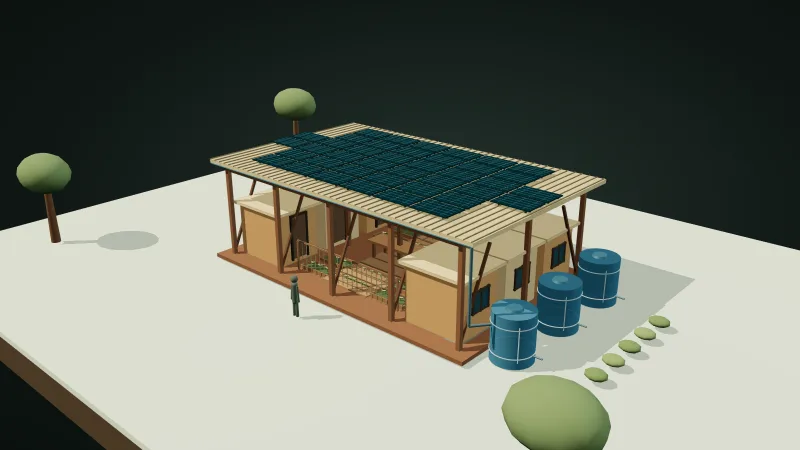 Canopy CommonsShare expensive systems. Keep private life private.
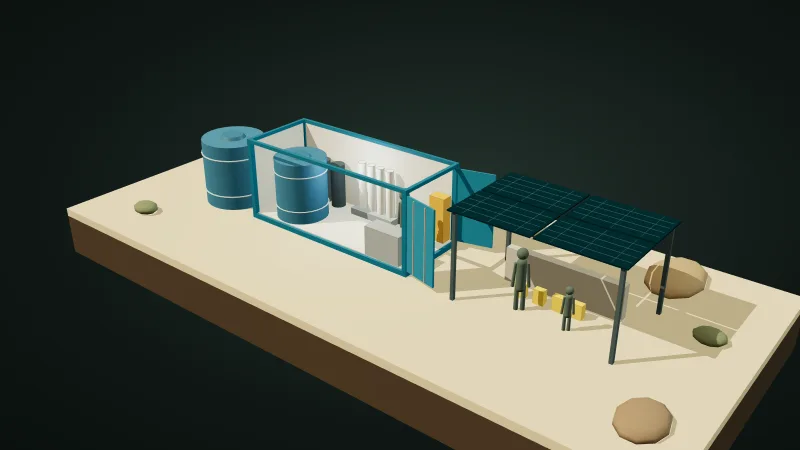 Water BoxTreat the water that is already there, and prove it is safe.
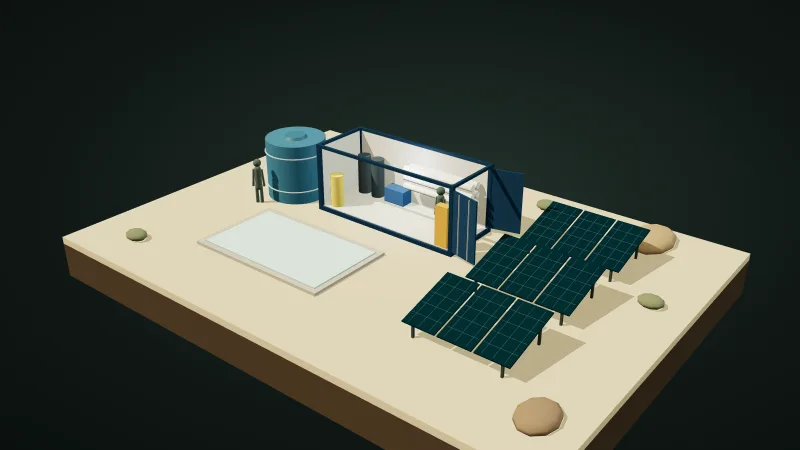 Desalination BoxDrinking water from a salty well, powered by the sun.
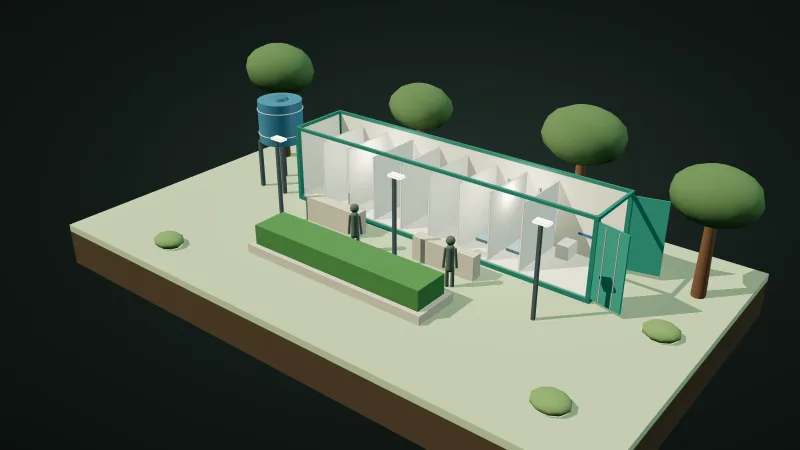 Wash BlockToilets, showers and laundry that are safe to use at night.
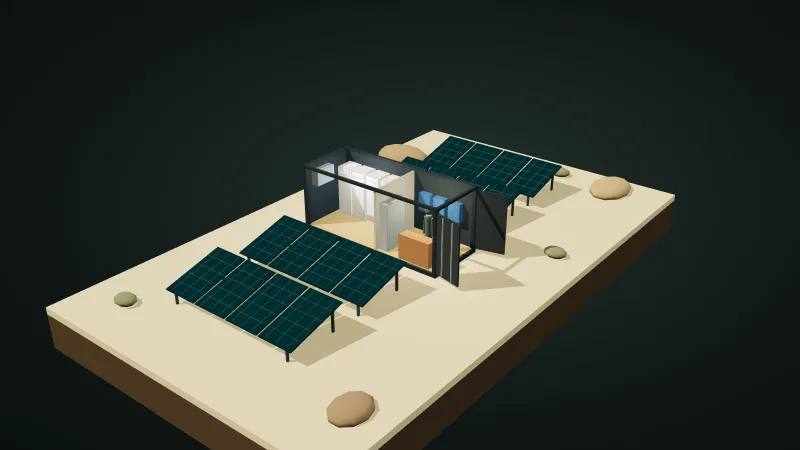 Power BoxA small grid that arrives on one truck.
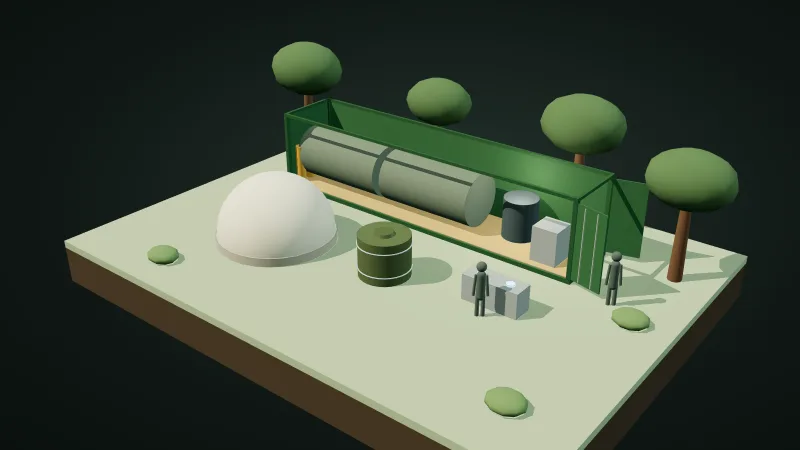 Biogas BoxCook on yesterday's kitchen waste.
 Recycling BoxGive waste plastic a price, and a second life.
 Clinic BoxTwo private rooms, cold vaccines and a working sink.
 Workshop BoxKeep the tools, the spares and the skills in the neighbourhood.